Blog / Bakeware Quality Control
How to Build a Commercial Bakeware Quality Inspection Plan
Turn drawings, intended use and purchase requirements into measurable checks for samples, production lots and repeat orders.
Bakeware China Editorial Team | 2026-08-26 | 9 min read
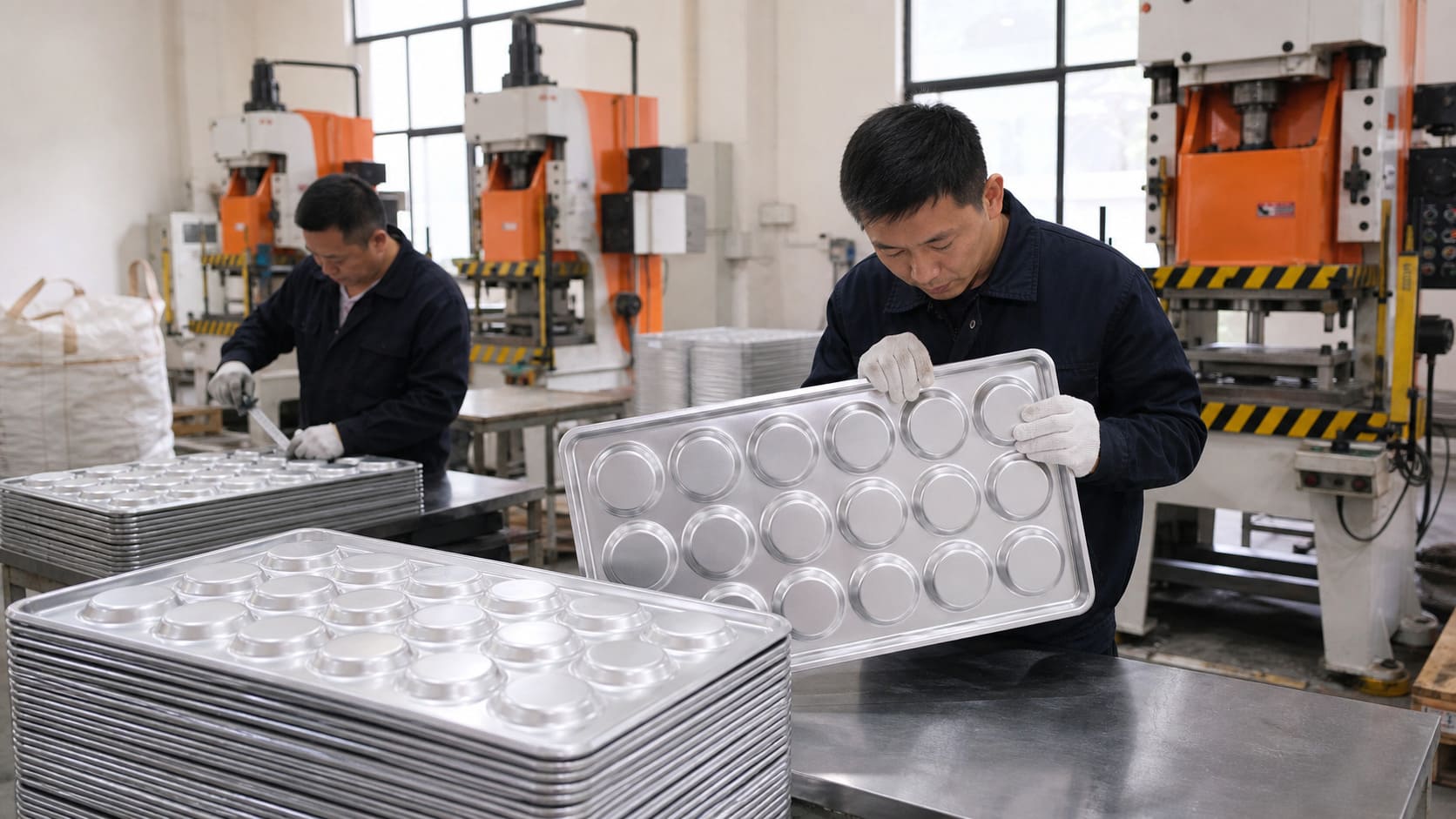
Begin with the approved specification
An inspection plan cannot repair an unclear purchase specification. Start with the signed drawing revision, approved sample, material and finish definition, food-contact document list, packaging standard, quantity and destination market. Identify which document controls when a sample, drawing and purchase order differ.
Record the intended product, food type, maximum process temperature, contact time, oven and conveyor route, cleaning method and handling conditions. These inputs determine which dimensions, surfaces and documents matter. The commercial bakeware RFQ template helps buyers collect them before quotation.
Separate critical, major and minor defects
Define defect classes before production. A critical defect could create an unacceptable safety or regulatory risk under the agreed use. A major defect could prevent fit, release, handling or sale. A minor defect may depart from the specification without materially affecting intended use. The contract should contain product-specific examples instead of relying on these general labels alone.
Possible inspection points include sharp exposed edges, cracks, loose joints, wrong material, dimensions outside tolerance, coating holidays, contamination, deformation, incorrect markings and damaged packaging. Whether an observation is critical, major or minor depends on the agreed construction and use; suppliers should not assign classes after inspectors find defects.
Make dimensions measurable
Mark critical-to-function dimensions on the drawing: overall length and width, diagonal, depth, flatness, rim or frame profile, cavity geometry, pitch, perforation, runner contact zones, stacking height and automated handling datums. State tolerances, coated or uncoated condition, measurement temperature and the gauge or fixture to use.
A nominal label such as full-size sheet pan is not an inspection method. For custom parts, approve a measurement report from the tooling or pre-production sample and retain the same datum scheme for production. See how to measure a custom baking pan for the drawing inputs buyers should freeze.
Inspect material, construction and workmanship
Link material checks to purchase documents and, where required, supplier records or test reports. State alloy or grade, temper where relevant, finished thickness range and surface treatment. Do not infer a specific alloy, certification or thickness from appearance alone.
Describe acceptable rims, beads, wire reinforcement, frames, welds, rivets, locks, seams and cavity attachments. Use photographs or a limit sample for subjective workmanship where possible. A clear acceptance boundary is more repeatable than words such as premium, smooth or heavy duty.
Match food-contact evidence to the exact use
The U.S. FDA explains that food-contact substances include materials used in processing equipment, preparation surfaces and cookware, and that regulatory status depends on the substance and intended conditions of use. Its conditions-of-use tables distinguish food types and temperature ranges, including cooking above 250 degrees F. Ask for evidence tied to the exact substrate, coating, intended food, time, temperature and market—not a generic supplier statement.
For EU-bound goods, Regulation (EC) No 1935/2004 establishes general requirements and defines traceability through manufacture, processing and distribution. Neither an inspection checklist nor a factory audit automatically certifies compliance. Review the food-contact document guide with qualified compliance advisers for the destination market.
Define coating and finish checks
Specify which surfaces are coated, the approved color or appearance range, coverage criteria and any measurable thickness or cure controls supplied by the coating system. Inspect for exposed areas, blisters, peeling, contamination, scratches and damage at rims or attachment points using agreed lighting and viewing distance.
Appearance inspection is not proof of release performance or service life. Use a representative bake-and-clean trial with recorded formula, release agent, temperatures, cycles and failure criteria. The commercial bakeware coating guide explains how to connect evidence, production controls and trials.
Choose a sampling plan deliberately
Buyers may inspect every unit or use an agreed sampling system. ISO 2859-1:2026 defines acceptance sampling schemes indexed by acceptance quality limit for lot-by-lot inspection. It uses lot size, inspection level and selected AQL to determine sample size and acceptance or rejection numbers.
An AQL is not a promise that a shipment contains that percentage of defects, and passing a sample is not proof that every unit conforms. State the standard edition, lot definition, inspection level, AQL by defect class, sampling method and switching rules in the contract. Buyers should select these values based on risk with appropriate quality expertise rather than copying a generic online table.
Plan in-process and final inspection
Move high-risk checks upstream. Verify incoming material identity, first-off dimensions, tooling condition and coating setup before a full lot is completed. At final inspection, confirm quantity, workmanship, measurements, assembly, markings, cleanliness, packing and required records.
For line-sensitive pans, run approved samples through conveyors, ovens, depanners, washers, stackers and racks before mass production. OSHA 29 CFR 1910.263 covers bakery machinery within its scope; trials must follow site guarding, lockout and operating procedures. Pan inspection does not replace equipment safety review.
Control packaging and shipment identity
Define separators, bags, cartons, pallet pattern, stack height, edge protection, moisture controls where justified, labels and maximum package weight. Inspect packaging before dispatch for count, orientation, abrasion risk and movement. A good pan can arrive unusable if coated surfaces rub or frames are loaded unevenly.
Connect carton and pallet labels to the purchase order, SKU, drawing revision, lot and quantity. Retain inspection reports and shipment photographs according to the buyer's traceability plan. Confirm any retail markings through the OEM and private label bakeware workflow.
Use corrective action and change control
Define what happens after a failed inspection: lot segregation, evidence review, rework approval, reinspection, replacement or other agreed disposition. Do not permit unapproved grinding, coating repair or part mixing where it could affect food contact, dimensions or traceability.
Require notice before changes to material source, thickness, tooling, forming route, joints, coating, cure, manufacturing location or packaging. Review whether the change requires new documents, measurements, samples or production trials. Keep approved revisions and limit samples available for repeat orders.
Commercial bakeware inspection plan checklist
Attach the controlling drawing and sample; intended use; defect list and classes; measurement methods; document requirements; sampling standard and parameters; in-process checks; final inspection; functional trials; packaging; lot identification; reporting; failure disposition and change-notification rules. Align the plan with the supplier checklist so procurement and quality teams evaluate the same evidence.
Frequently asked questions
What should a commercial bakeware inspection plan include?
Include controlled specifications, defect classes, dimensions and methods, material and coating checks, food-contact documents, sampling, functional trials, packaging, reporting and change control.
Does passing AQL inspection mean a lot has no defects?
No. Acceptance sampling makes a decision from a defined sample. It does not inspect every unit or guarantee a defect-free lot.
Which bakeware dimensions should be critical?
Classify dimensions that affect equipment fit, product geometry, stacking, depanning or safe handling according to the actual production route and agreed risk.
Can a visual check confirm food-contact compliance?
No. Visual inspection can identify workmanship issues, but compliance evidence must match the exact material or coating, intended conditions of use and destination market.
Should buyers inspect every shipment?
The frequency depends on risk, supplier history, lot structure and contract terms. Define normal, tightened or reduced inspection rules rather than changing the plan informally.
Request an inspection-ready bakeware quotation
Send your product type, drawing, intended use, material and coating requirements, critical dimensions, defect criteria, sampling plan, quantity, packaging and destination market. Bakeware China can review the specification and prepare a quotation for commercial baking pans, trays, molds or racks. Use our inquiry form.
To make drawing requirements repeatable at receiving and final inspection, use the commercial bakeware dimensional inspection guide to align datums, fixtures, gauges, sampling and acceptance records.