Blog / Commercial Sheet Pan Sourcing
Commercial Sheet Pan Gauge Guide: What Buyers Should Specify
Do not buy sheet pans by gauge alone. Specify material, finished thickness, rim construction, flatness, load, line interfaces, coating, trial criteria and repeat-order inspection.
Bakeware China Editorial Team | 2026-08-14 | 8 min read
Start with the load and process, not the gauge number
Gauge is only one input. A bakery buyer should define product weight, loading pattern, oven route, rack pitch, conveyor contacts, washing method, stacking height and expected service life before comparing thickness.
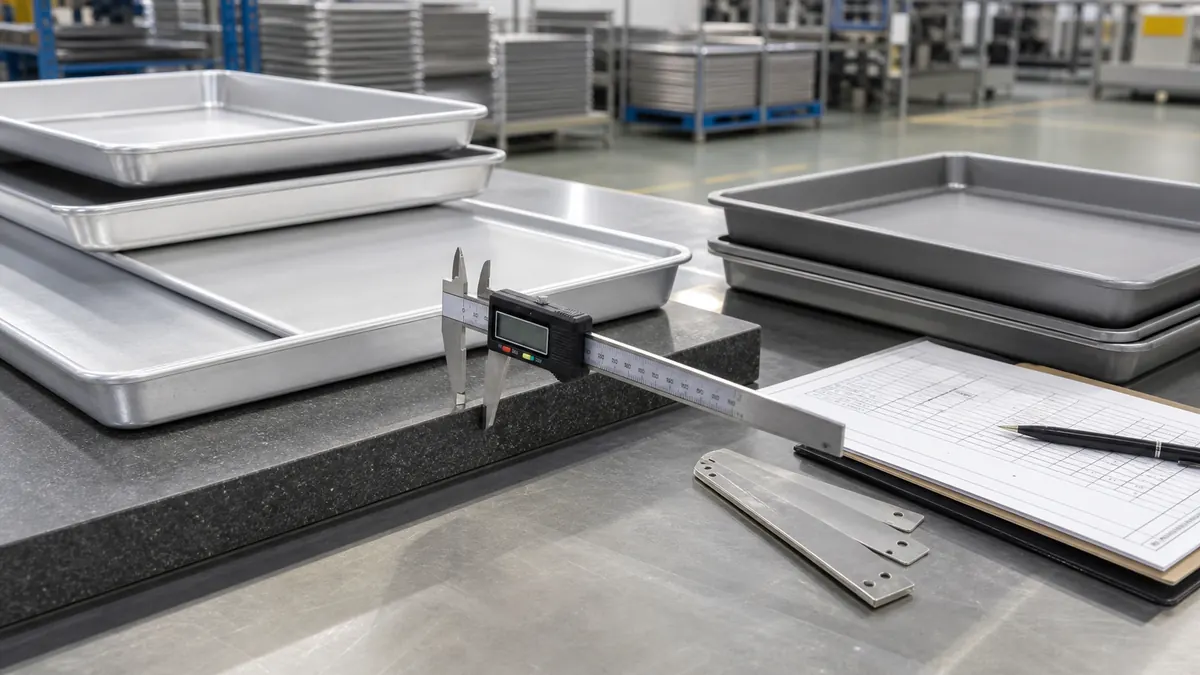
For repeatable purchasing, ask suppliers to quote actual finished thickness in millimeters or inches as well as gauge. Gauge tables can vary by material and region, so a drawing with thickness tolerance is safer than a generic gauge label.
Separate material choice from thickness choice
Aluminum, aluminized steel and carbon steel do not behave the same at the same thickness. Thermal response, stiffness, corrosion behavior and coating preparation all change the result.
Use the aluminized steel vs aluminum bakeware guide when the purchasing team needs a material-level comparison before freezing pan thickness.
Define rim, wire and reinforcement construction
A heavier bottom sheet does not fix a weak rim. Specify open bead, closed bead, wire-reinforced rim, strap, corner treatment, welds or rivets, and whether the rim must survive automatic denesting or high-stack storage.
If pans run on automated equipment, mark every contact point on the drawing and review the automated-line tray specification guide.
Control flatness and warping with measurable criteria
Set a flatness method, fixture or surface, temperature condition and acceptance limit. A pan that looks acceptable cold may move differently after oven cycling.
Approve a production-representative sample and run it through loading, baking, cooling, washing and stacking before releasing volume production.
Match coating and release requirements to the use
Coating selection depends on food type, oiling, sugar, temperature, cleaning chemistry and utensils. Thickness alone does not guarantee release or coating life.
Use the commercial bakeware coating guide to request coating system, preparation, cure, migration evidence and change-control records.
Create an inspection plan buyers can repeat
List critical dimensions: length, width, diagonal, rim height, usable surface, thickness, flatness, radius and weight. Add coating coverage, burrs, sharp edges, contamination, packaging and lot identification.
Require notice before any change to metal supplier, thickness, temper, forming route, rim tooling, coating, manufacturing location or packaging.
Build a sheet pan RFQ that gets comparable quotes
Attach drawings, load conditions, oven and rack interfaces, material preference, finished thickness, rim design, finish, food-contact document requirements, sample plan, annual volume, packing method and destination.
If dimensions are not finalized, first use the custom pan measuring guide, then send the controlled dimensions through the custom baking pans page.
Commercial Sheet Pan Gauge RFQ Checklist
| Area | Buyer input | Approval record |
| Thickness | Finished thickness and tolerance | Controlled drawing |
| Construction | Rim, wire, corners and reinforcement | Sample approval |
| Use | Load, oven, rack, washer and stacking | Line trial |
| Quality | Flatness, dimensions, coating and packaging | Inspection plan |
Frequently asked questions
What gauge is best for commercial sheet pans?
There is no universal best gauge. Select the finished thickness from load, pan size, material, rim design, oven cycling, washing, stacking and line handling.
Should RFQs use gauge or millimeters?
Use millimeters or inches with tolerance. Gauge can be added as a reference, but the drawing should control actual finished thickness.
Does thicker sheet pan material always bake better?
No. Thicker pans may improve stiffness but can change heat response, weight, cost and handling. Validate the selected construction in the intended process.
What should be checked before mass production?
Check dimensions, flatness, rim strength, release, line tracking, washing, stacking, coating quality, packaging and lot identification.
Request a specification review
Need a controlled sheet pan specification? Send pan size, load, oven or rack interface, material, thickness, rim preference, coating need, quantity and destination for a practical quotation route. Use our inquiry form.