Blog / Bakeware Material Selection
Aluminized Steel vs Aluminum Bakeware: A Buyer Comparison
Choose aluminum when fast heat response and light handling matter most. Choose aluminized steel when stiffness, abrasion resistance and industrial durability are higher priorities, then validate the exact finish and process.
Bakeware China Editorial Team | 2026-08-14 | 8 min read
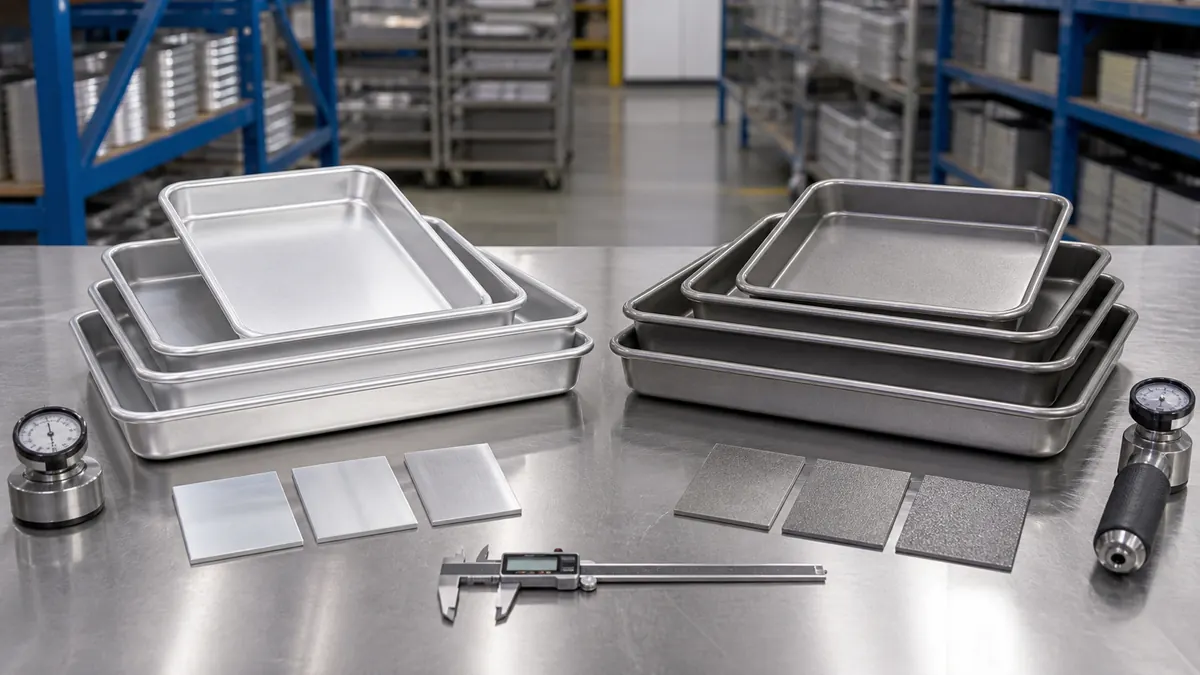
Compare the bakery job before comparing materials
The right material depends on product, oven type, conveyor or rack handling, washing, stacking, target weight, coating and destination-market documents. A material name alone does not define performance.
For buyer SEO and procurement clarity, the RFQ should state material grade, thickness, surface finish, coating, use conditions and inspection criteria.
How aluminum usually performs
Aluminum is lightweight and responds quickly to oven temperature changes. It is widely used for sheet pans, cake pans and trays where handling weight and thermal response matter.
Buyers should still define alloy, temper, thickness, surface treatment and cleaning conditions. Bare aluminum, anodized aluminum and coated aluminum are different purchasing decisions.
How aluminized steel usually performs
Aluminized steel combines a steel core with an aluminum-silicon surface layer. It can offer higher stiffness than aluminum at comparable geometry and is common in commercial bakeware that needs stronger structure.
The steel core means exposed cut edges, scratches, cleaning chemistry and storage conditions deserve attention. Coating and edge design should be specified clearly.
Do not reduce the choice to browning claims
Color, coating, pan mass, surface contact, oven airflow and recipe all affect browning. Buyers should avoid broad claims such as aluminum bakes better or aluminized steel is always stronger.
Run a representative trial using the intended product, oven, loading pattern and cleaning process. Record results separately for product quality, handling, release and durability.
Food-contact documents still matter
Material certificates, coating declarations and test reports must match the exact construction and destination market. The food-contact document guide explains which records buyers should request.
When non-stick coating is used, also define coating system, cure, thickness range, release trial and change control.
Cost comparison should include service conditions
Piece price is only part of total cost. Handling weight, deformation, coating life, cleaning survival, nesting damage, transport damage and rejected lots can matter more than a small unit-price difference.
Ask suppliers to quote the same drawing in both candidate materials only after the critical dimensions and process route are frozen.
Best RFQ structure for material comparison
Send one drawing, two material options, the same coating request, annual volume, sample quantity, inspection plan and process description. Ask the supplier to list assumptions and risks separately.
Use this comparison together with the sheet pan gauge guide when choosing thickness and construction.
Aluminized Steel vs Aluminum Buyer Matrix
| Factor | Aluminum | Aluminized steel |
| Handling | Usually lighter | Usually stronger but heavier |
| Thermal response | Fast response | Depends on steel core and finish |
| Durability | Depends on alloy and thickness | Good stiffness when specified correctly |
| RFQ control | Alloy, temper, thickness and finish | Grade, coating layer, edges and finish |
Frequently asked questions
Is aluminized steel better than aluminum for bakeware?
Not universally. Aluminized steel can offer stronger structure, while aluminum is lighter and thermally responsive. Select by product, equipment and validation results.
Is aluminum bakeware safe for commercial use?
It can be suitable when the material, finish, use conditions and destination-market food-contact requirements are properly verified.
Can both materials use non-stick coating?
Yes, but coating preparation, adhesion, cure and service life must be validated for the exact base material and process.
Which material is better for automated lines?
The answer depends on stiffness, weight, rim design, tracking, washing, stacking and equipment contacts, not material name alone.
Request a specification review
Comparing aluminized steel and aluminum for a commercial pan program? Send the drawing, process route, coating need, cleaning method, quantity and destination market for a material recommendation. Use our inquiry form.