
Commercial Bakeware Procurement
Commercial Bakeware Landed Cost: How Buyers Compare Factory Quotes
Compare commercial bakeware suppliers on total landed cost, not unit price alone: freight, duty, packaging, quality, inventory and line risk.
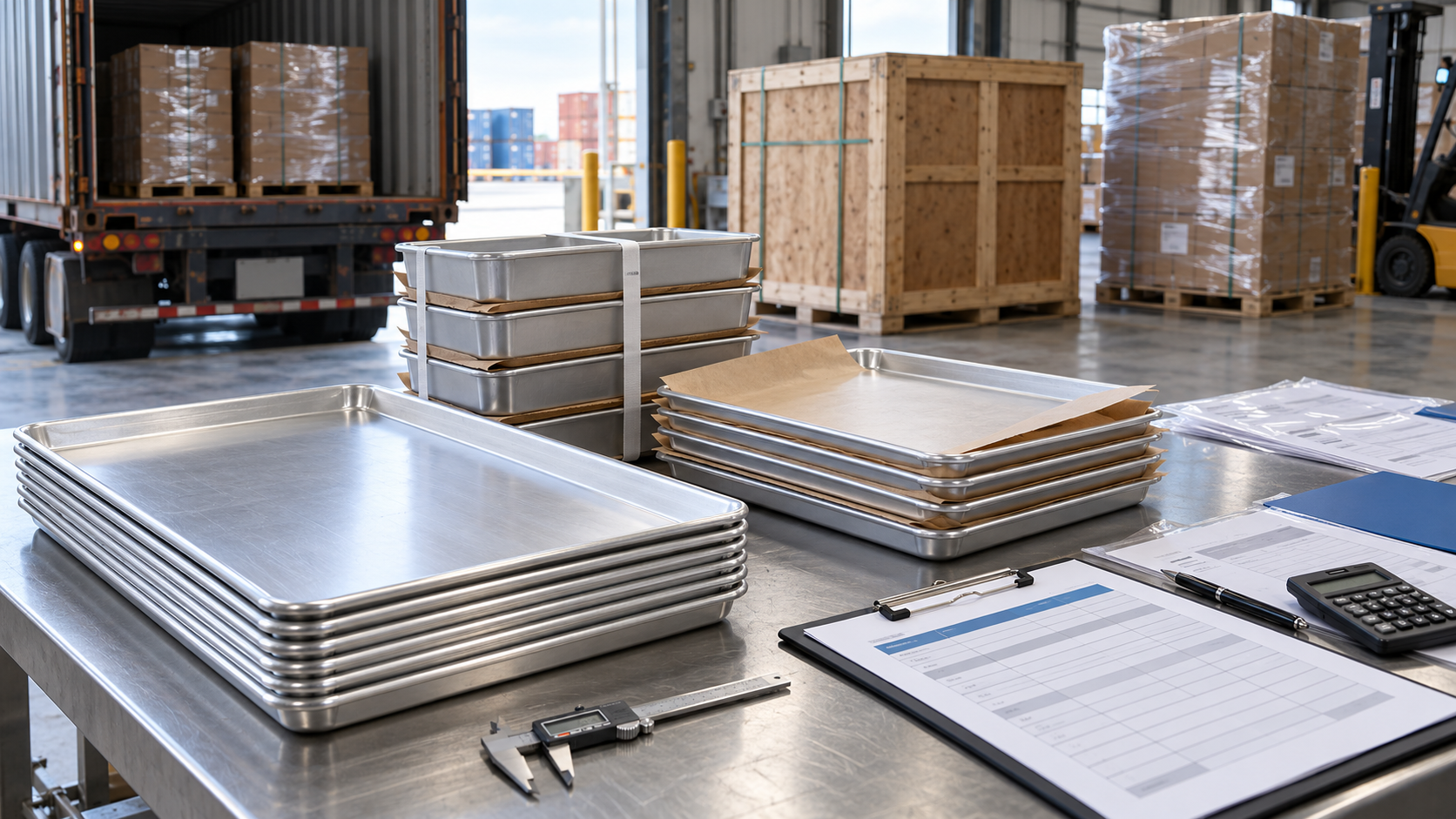
Normalize the commercial basis before comparing prices
Put every quote on the same SKU, drawing revision, material, coating, packing count, order quantity, currency, validity period and delivery destination. A lower unit price is not comparable when it assumes a different gauge, finish, carton count or accepted quantity.
Record the named Incoterms® 2020 rule and named place or port. ICC explains that the rules allocate obligations, risk and certain costs between buyer and seller; they do not replace the sales contract. Confirm the selected rule with the freight forwarder and contract owner.
Build the landed-cost bridge
Start with the accepted goods value, then add tooling amortization, sample or inspection charges, export packing, inland origin transport, terminal and documentation charges, main freight, insurance where applicable, destination handling, customs brokerage, duty, taxes or user fees, final delivery and bank or currency costs.
Keep quoted, estimated and excluded amounts in separate columns. Do not bury an unknown duty rate or destination charge inside a single allowance; assign an owner and refresh date to every estimate.
Use volume and weight that match the packing plan
Commercial bakeware is often bulky before it is heavy. Request carton dimensions, pallet pattern, gross and net mass, stack height, container utilization and whether separators or crates are required. A nesting change can alter freight cost and coating-damage risk at the same time.
Compare the quote with the approved export packaging specification. Include non-stackable space, pallet exchange, fumigation or wood-treatment requirements, unloading constraints and warehouse handling where relevant.
Verify duties, taxes and destination fees
Ask the importer of record or licensed customs specialist to confirm classification, origin, customs value, duty treatment and destination-specific fees before purchase. Rates and trade measures can change; a supplier estimate should not be treated as the buyer’s customs decision.
For the United States, CBP notes that imported goods can attract duties plus processing or mode-specific user fees. Other destinations use different systems, so keep the landed-cost model country- and date-specific.
Price quality loss and operational risk
Add expected cost for rejected units, reinspection, sorting, rework, coating damage, dimensional failures, shortages and warranty handling. Use evidence from approved samples, first-article inspection and supplier performance instead of applying the same risk percentage to every source.
For line-critical pans, include the exposure from late delivery or poor fit: expedited freight, idle labor, reduced throughput, product scrap and emergency local replacement. A reliable higher-priced quote can produce the lower operating cost.
Model inventory, lead time and replenishment
Convert total lead time into working capital and safety-stock requirements. Include production, inspection, booking, transit, clearance, receiving and line-release time, then test the effect of demand variability and replenishment delays.
Separate reusable tooling from recurring unit cost and show the quantity over which tooling is amortized. Compare at the forecast purchase volume, not only at the supplier’s most favorable break point.
Run a sensitivity range before award
Calculate a base case and at least one adverse case for freight, exchange rate, duty treatment, rejection rate and delay. Show landed cost per accepted, line-ready unit—not merely per shipped unit.
Release the purchase order only when commercial assumptions, technical approval, packaging, inspection, payment milestones and change-control responsibilities agree. Keep the model with the quote revision so later orders can be compared on the same basis.
Landed-Cost Quote Comparison Gate
| Cost block | Buyer normalizes | Evidence to retain |
|---|---|---|
| Goods and tooling | Accepted quantity, unit value and amortization | Quote, drawing and tooling terms |
| Logistics | Packing, volume, weight, route and Incoterms rule | Packing plan and freight quote |
| Border and delivery | Classification, origin, duty, fees and final mile | Broker estimate and assumptions |
| Quality and service | Inspection, rejects, rework and warranty | Approval and supplier records |
| Inventory and risk | Lead time, safety stock, currency and delay case | Sensitivity model and award note |
Primary references: ICC Incoterms® 2020 for cost, risk and obligation allocation; destination customs authorities or a licensed specialist for current classification, duties, taxes and fees.
Frequently Asked Questions
What is included in landed cost for commercial bakeware?
Include the accepted goods value plus relevant tooling, packing, origin and destination handling, freight, insurance, brokerage, duty, taxes or fees, final delivery, inspection, quality loss and inventory carrying effects.
Does an Incoterms rule equal landed cost?
No. Incoterms allocate certain obligations, costs and risks between buyer and seller, but they do not replace the sales contract or calculate every customs, finance, quality or operating cost.
Should buyers compare cost per shipped pan or accepted pan?
Use cost per accepted, line-ready unit. Include expected shortages, rejects, rework and inspection so quality differences are visible in the comparison.
Who should confirm the duty rate?
The importer of record should work with an appropriate customs specialist or authority for the destination. Classification, origin, valuation and current trade measures can change the result.
How should tooling cost be compared?
Show tooling as a separate, clearly owned cost, state whether it is reusable or refundable, and amortize it over the realistic forecast quantity rather than an optimistic volume.
Instant Quote
Compare the complete commercial cost.
Send the pan drawing, quantity, approved material and coating, packing requirements, destination, target Incoterms rule and delivery window. Bakeware China can return a quote with the inputs needed for a buyer-owned landed-cost comparison.