Bakeware Hygiene Engineering
Commercial Bakeware Drainage and Drying: Hygienic Washdown Specification Guide
How bakery procurement and quality teams can turn drainage, washdown and drying requirements into measurable bakeware specifications.
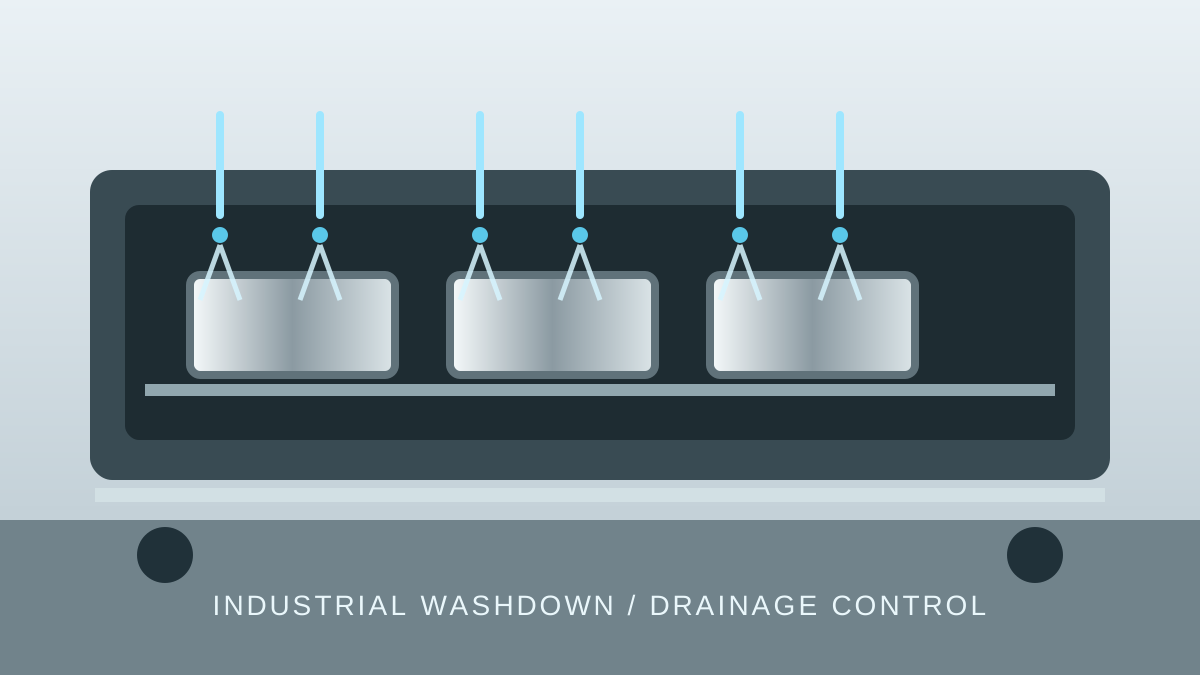
Define the hygiene outcome
Specify the soil, allergen, moisture and microbiological risks the bakeware must release during the approved washdown cycle. A “washable” claim is not enough unless the buyer defines the cleaning chemistry, temperature, contact time and drying endpoint.
Record product residue, line changeover frequency, sanitation window and inspection method. This creates a common acceptance language for the bakery, washer supplier and bakeware manufacturer.
Design drainage paths into the pan
Use slopes, corner radii, drain holes and formed channels that allow rinse water and chemistry to leave the pan without pooling. Avoid blind pockets behind rims, straps or reinforcement where residue can remain after the conveyor exits the washer.
Review the pan in its actual orientation on the rack or conveyor. A feature that drains on a bench may trap liquid when nested, tilted or constrained by a frame.
Control nesting and spacing
Define the minimum gap between nested pans, the permitted overlap and the orientation used for spray access. Tight nesting can block jets and create shadow zones even when the outer pan appears clean.
Validate the full stack or rack pattern, not only a single pan. Include leading, center and trailing positions so the buyer can distinguish washer coverage from loading variation.
Specify materials and surface condition
State alloy or steel grade, coating system, surface roughness targets, weld finish and prohibited defects. Scratches, exposed edges and rough welds can retain soil and accelerate coating failure under repeated washdown.
Require a controlled sample after forming and finishing. The cleaning result must be tied to the production-intent surface, not a polished laboratory coupon.
Qualify the washdown cycle
Freeze conveyor speed, spray pressure, nozzle pattern, chemistry concentration, water temperature, rinse quality and drying air. Capture actual values during the trial rather than relying only on equipment settings.
Run soiled and cleanability cycles at minimum, nominal and maximum load. Retain photographs, swab or visual results, pan identity and any deviations that could affect disposition.
Set drying and release criteria
Define the point at which a pan is safe to stack, store or return to production: no visible pooling, no trapped droplets at defined inspection points and no unacceptable moisture carryover.
Test the worst-case orientation and stack depth. If residual water is allowed, specify the maximum mass, time-to-dry or location so operators do not make subjective release decisions.
Lock inspection and change control
Link drainage and drying acceptance to the drawing revision, coating revision, washer recipe and rack configuration. A new rim, hole, strap or nesting pattern can invalidate an earlier cleanability result.
Revalidate after supplier changes, tooling repairs, washer maintenance, chemistry changes or recurring residue findings. Keep the approved report with the purchase specification and sanitation work instruction.
Drainage, Washdown and Drying Approval Matrix
| Control area | Buyer specification | Acceptance evidence |
|---|---|---|
| Drainage geometry | Slopes, radii, holes, channels and orientation | Drawing plus no-pooling inspection |
| Nesting/load | Gap, overlap, rack and worst-case position | Full-stack washdown run |
| Surface condition | Material, roughness, weld and coating revision | Production-intent sample inspection |
| Wash cycle | Pressure, chemistry, temperature, speed and rinse | Recorded settings and deviation log |
| Drying endpoint | Pooling, moisture carryover and release rule | Signed release report |
| Change control | Triggers and delta/full revalidation rule | Revision-linked validation record |
Frequently Asked Questions
What does good bakeware drainage mean?
It means rinse and wash chemistry can leave the pan in the approved orientation without persistent pooling or trapped residue at defined inspection points.
Should buyers test a single pan or a full stack?
Both are useful, but release should include the real rack or nesting pattern because spacing and shadowing change spray access and drying.
Are drain holes always required?
No. Slopes, radii and orientation may be sufficient, but the decision should be proven in the production-intent washdown cycle.
What drying result should a supplier guarantee?
State a measurable endpoint such as no visible pooling at named locations or a defined time-to-dry under the approved air and load conditions.
When should cleanability be revalidated?
Repeat after changes to geometry, coating, finishing, rack pattern, washer recipe, chemistry, nozzle layout or recurring residue findings.
Hygiene Engineering Review
Turn washdown into a controlled bakeware requirement.
Send the pan drawing, nesting pattern, coating revision and washer cycle for a hygienic washdown review.