Blog / Industrial Baguette Pan Sourcing
How to Specify Commercial Baguette Pans for an Industrial Bakery
Build an inspection-ready commercial baguette pan specification around the bread target, pan geometry, bakery-line interfaces and a production-representative trial.
Bakeware China Editorial Team | 2026-08-07 | 9 min read
Start with the baguette and process target
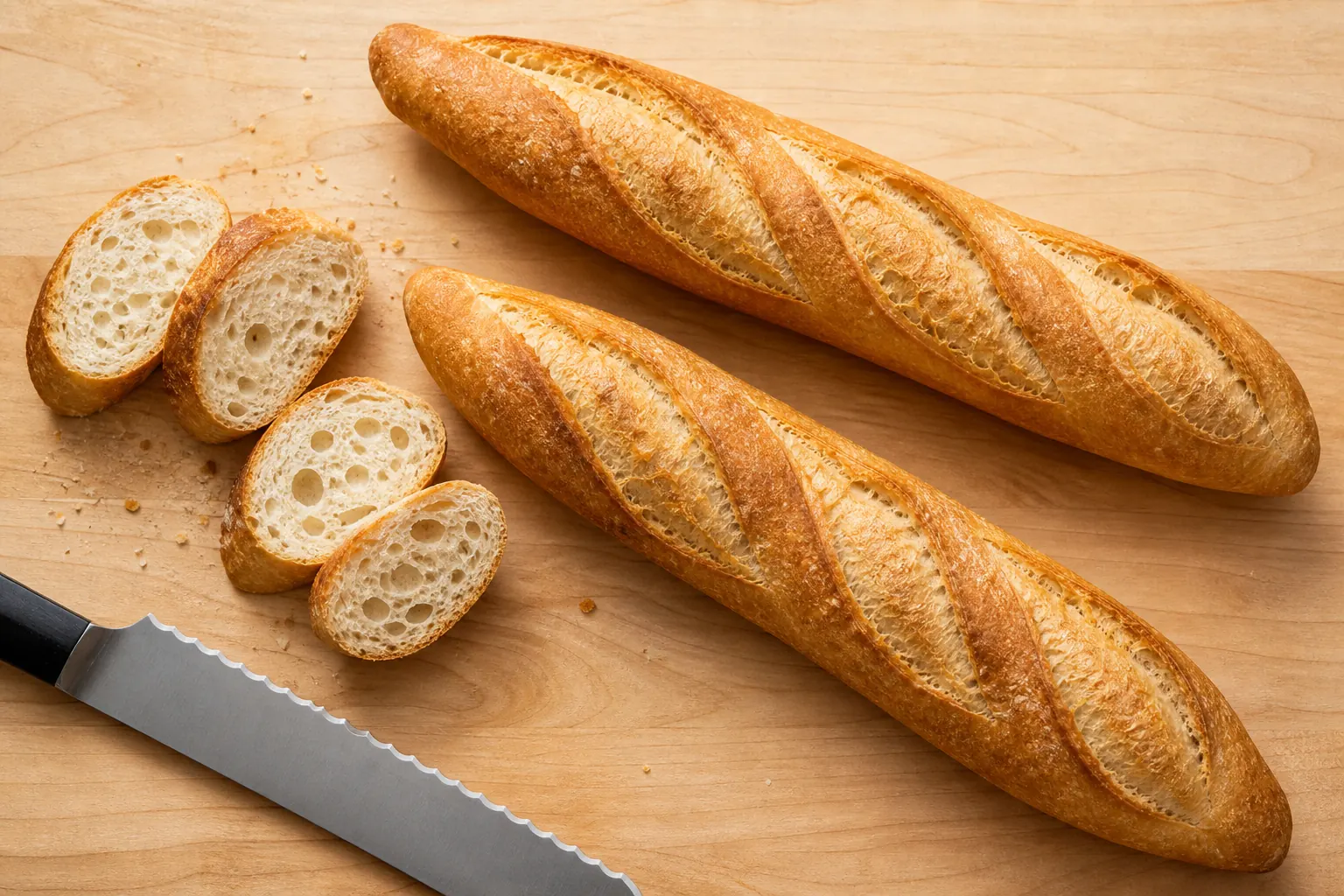
Give the pan supplier a controlled brief for the intended product: dough-piece weight range, shaped length, target baked profile, scoring pattern, proof condition and bake profile. State whether the product is transferred directly into channels, loaded on a peel or handled by an automated system. A catalog description such as four-channel baguette pan does not define the result.
Agree which attributes the bakery will judge in the trial, such as length, cross-section, base appearance, release and handling. Recipe, proofing, oven loading and bake settings also influence the product, so a pan specification should not promise a universal crust, volume or bake time.
Define channel geometry on a controlled drawing
Specify channel count, usable channel length, top opening, depth, pitch, end profile and transition radii. Add the full pan envelope, frame or rim construction, loading direction and any permitted bread projection. Reference datums and measurement locations so the buyer and factory measure the same features.
Select a three-channel, four-channel or other layout only after checking loaf spacing, oven or rack envelope, operator handling and line pitch. More channels do not automatically mean more usable throughput if the pan no longer fits the process.
Treat perforation as a measurable specification
For a perforated baguette tray, put hole shape, nominal hole size, pattern, center spacing, open zones and solid border zones on the drawing. Identify areas that must remain solid for forming, reinforcement, sensors, conveyor contact, marking or food-support needs. If a mesh or screen is proposed, specify its construction and attachment separately.
Perforation changes the formed sheet and food-support surface, but its baking effect depends on dough, liner use, oven airflow and bake settings. Approve the chosen pattern through a representative trial rather than accepting an unsupported claim that a certain open area guarantees crust or release.
Map every rack, oven and conveyor interface
Record the usable oven, proofer, washer, rack and conveyor envelope. Mark contact rails, chains, belts, stops, sensors, indexers, lifts, stackers and depanning equipment. Specify datum edges, pan travel direction, grip areas, clearance and the surfaces that must remain free of perforations or protrusions.
For automated lines, use the equipment maker's interface drawing as a controlling input and review the separate commercial baking tray specification guide. OSHA 29 CFR 1910.263 applies to the design, installation, operation and maintenance of bakery machinery in its scope and includes bakery conveyor safeguards. Pan trials must follow the site's guarding and operating procedures; a sample pan is not authorization to bypass a guard or interlock.
Specify material, finish and food-contact evidence
Define the base metal and grade, thickness, temper where relevant, formed structure, reinforcement, joints, surface preparation and any coating. If release coating is required, name its intended food, temperature, cleaning and duty conditions and use the coating specification guide to request matched documentation and trial controls.
FDA describes food-contact substances as including materials used in processing equipment, food-preparation surfaces and cookware, and its reference tables distinguish bakery food types and conditions of use. For EU programs, Regulation (EC) No 1935/2004 covers articles intended or reasonably expected to contact food and requires traceability. These sources define buyer checks; they do not prove that an unlisted pan or coating is approved. Verify evidence for the exact material, finish, food, conditions and destination market.
Approve a production-representative sample
The sample should use the intended forming route, material, perforation tooling, frame, joints, preparation and coating process. Run it through makeup, proofing, loading, baking, unloading, depanning, washing, stacking and storage under the bakery's normal safe procedures. Record product results and mechanical handling separately.
Check bread support, channel fit, sticking, visible deformation, sharp edges, pan tracking, sensor response, stacking and cleaning against written criteria. Freeze the accepted drawing revision, sample ID, recipe and process window. Results apply to the tested configuration and do not establish performance for every dough, oven or cleaning method.
Turn the approved sample into inspection controls
Identify critical-to-fit dimensions such as overall envelope, datum edges, channel pitch, usable length, top opening, depth and frame locations. State tolerances, measurement tools, inspection frequency and whether dimensions apply before or after coating. Add workmanship criteria for burrs, exposed edges, contamination, joint quality, coating coverage and packaging protection.
Agree how flatness or rocking will be checked on a defined surface and in which orientation. For repeat orders, require lot identification and notice before changes to material, tooling, perforation, construction, coating, cure, manufacturing location or packaging.
Build a complete baguette pan RFQ
Attach the product brief, controlled pan drawing, equipment interfaces, material and finish requirements, food-contact document list, trial protocol and inspection plan. Include annual demand, order quantity, sample quantity, destination, packaging, shipping terms and target schedule without treating an early estimate as a guaranteed production commitment.
Use the commercial bakeware supplier checklist to compare evidence and change controls. For a custom channel arrangement, send the drawing and process inputs through the custom baguette pans page.
Frequently asked questions
What information is needed to quote commercial baguette pans?
Provide the bread and process target, pan and channel drawing, perforation, material and finish, line and rack interfaces, cleaning method, quantity, destination market, inspection needs and packaging.
How many channels should a commercial baguette pan have?
There is no universal count. Select it from baguette size and spacing, oven or rack envelope, line pitch, handling mass and validated process results.
Are perforated baguette pans always better?
No. Perforation must suit the dough, desired product, oven airflow, handling and cleaning process. Compare a defined pattern in a representative trial.
Should the pan supplier set the final channel dimensions?
The supplier can develop a proposal, but the bakery should approve a controlled drawing and production-representative bake and line trial before volume production.
What should be controlled on repeat orders?
Control drawing revision, critical dimensions, material, perforation, construction, coating, workmanship, packaging, lot identification and notification of process or source changes.
Request a baguette pan specification review
Planning a baguette line or replacing a pan fleet? Send your loaf target, dough and bake process, pan or equipment drawing, perforation preference, material and coating requirements, quantity and destination market for a specification review and quotation. Use our inquiry form.