
3-Channel Baguette Pans
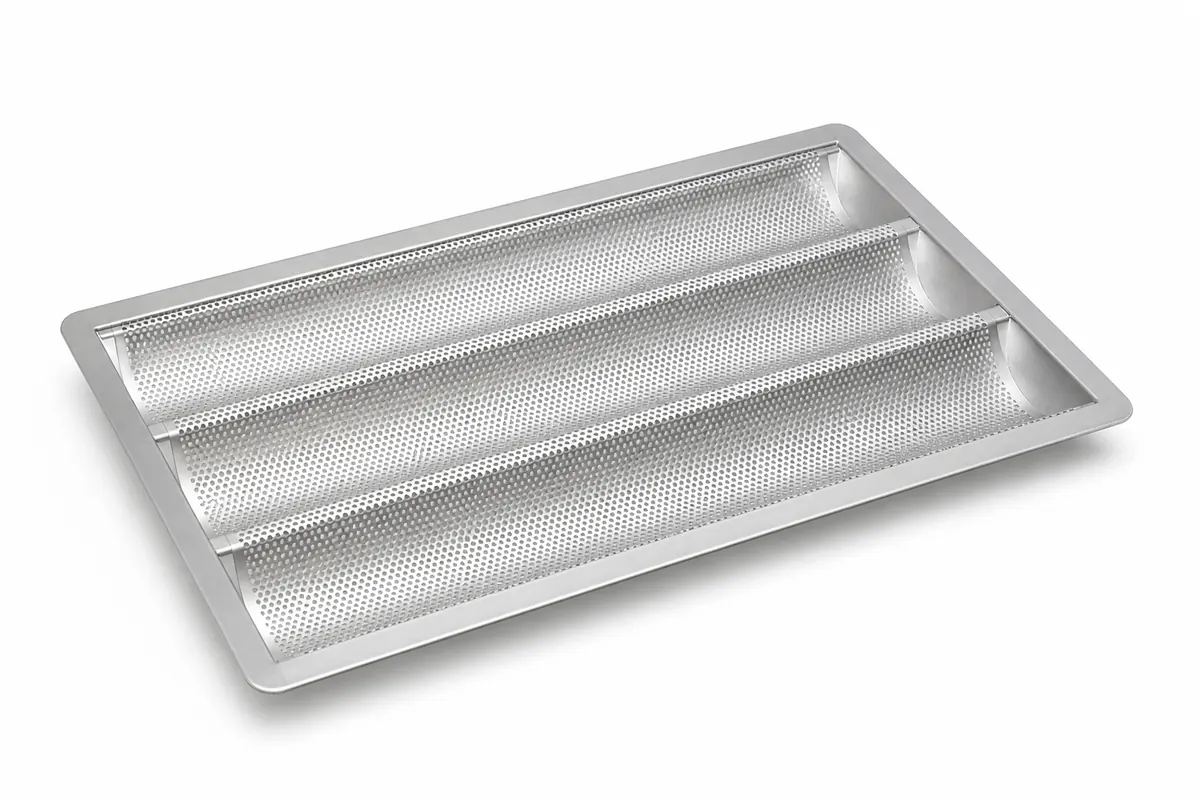
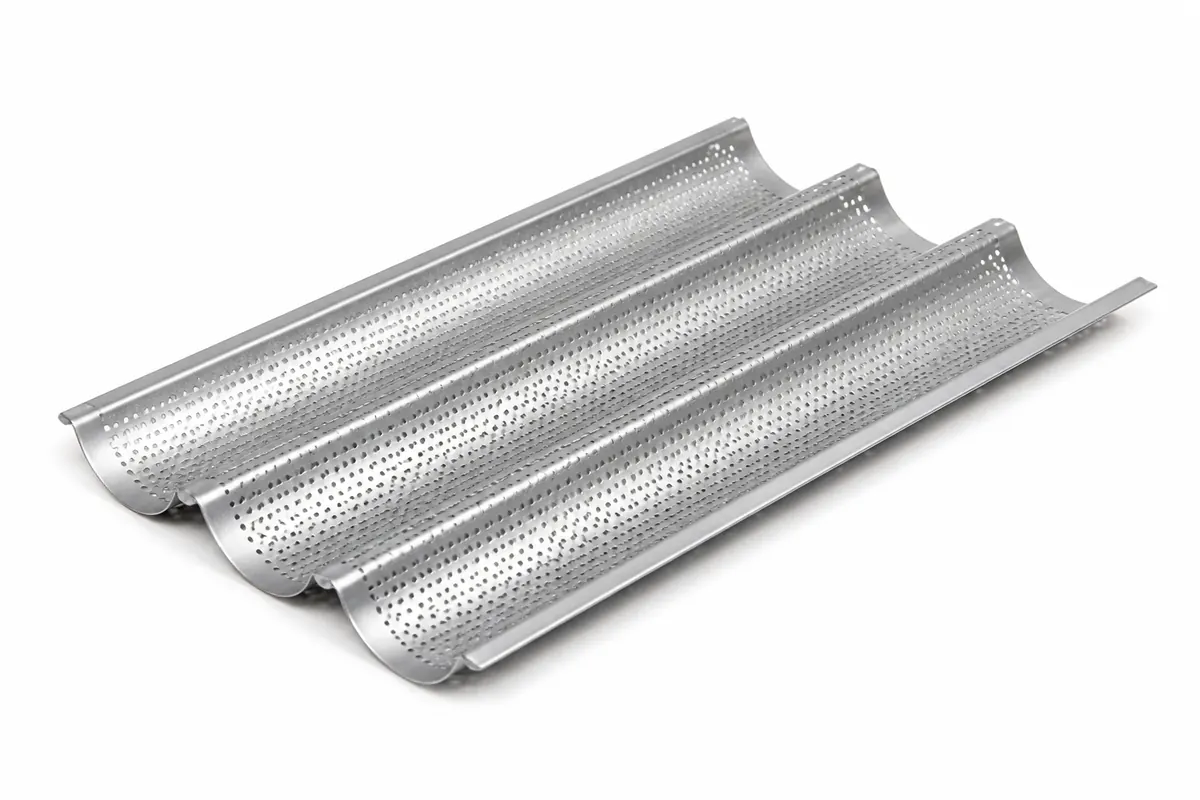
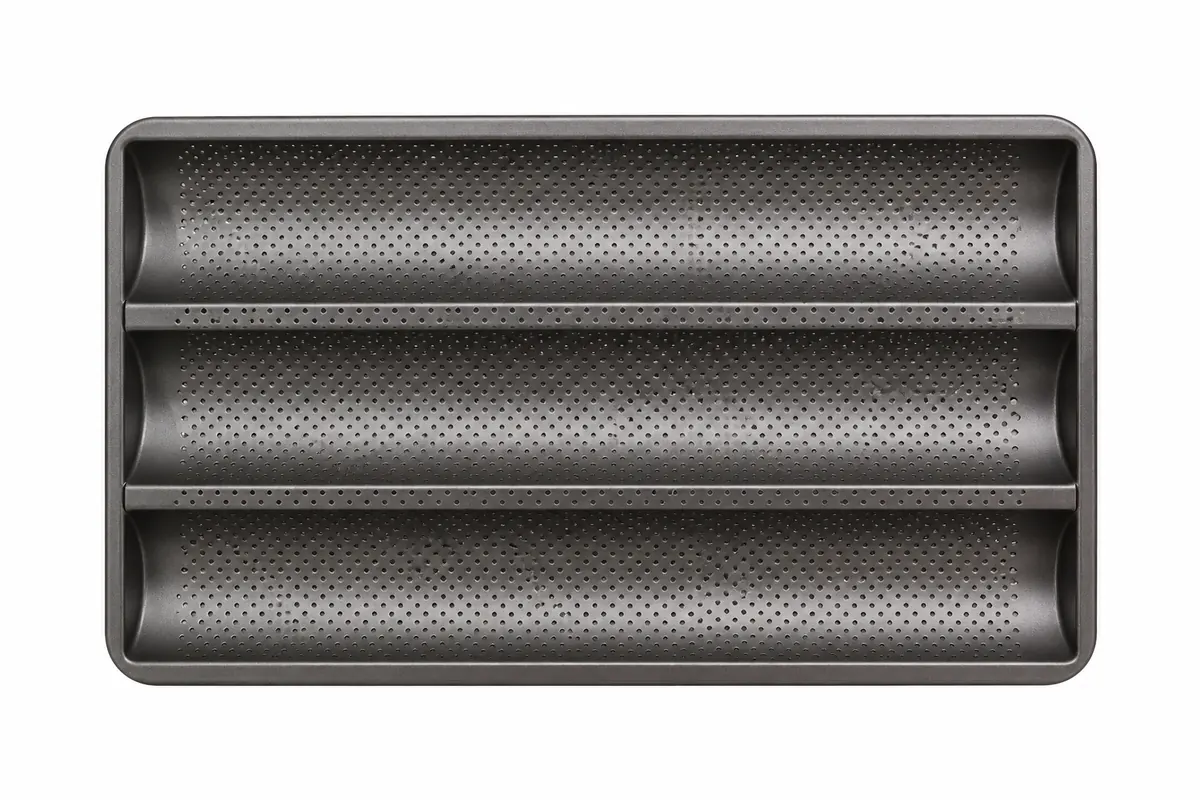
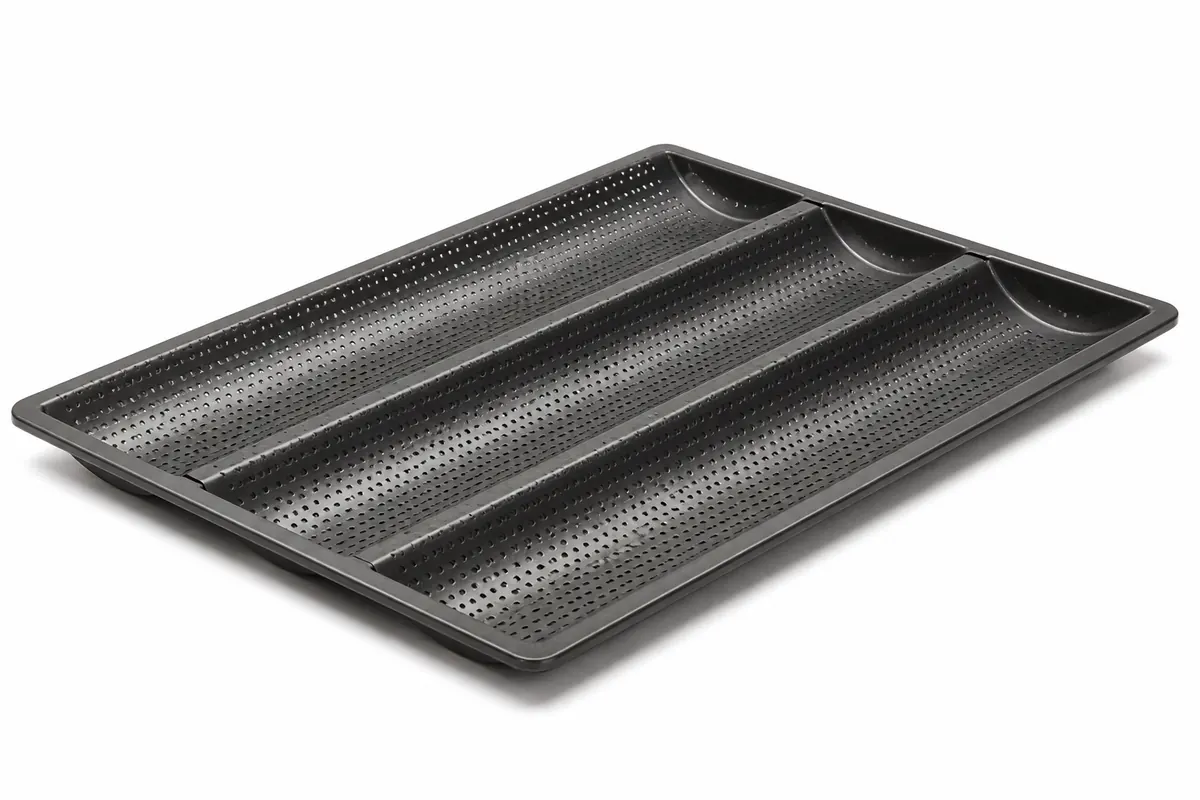
3-channel baguette pans support three loaves per tray and are commonly reviewed where buyers need a balanced commercial baguette tray layout for bakery production, rack loading or oven use.
Product Overview
A 3-channel layout requires attention to channel spacing, loaf dimensions, rim or frame structure and the overall tray envelope. The spacing between channels affects product arrangement and should be checked against the bakery process before sample approval.
Specifications
| Product configuration | Three baguette channels |
| Pan dimensions | Custom to tray footprint and bakery workflow |
| Channel spacing | Custom, based on three-loaf arrangement and airflow needs |
| Channel geometry | Custom, based on loaf size or approved drawing |
| Material options | Aluminum, aluminized steel or coated steel |
| Surface design | Perforated zones or project-specific surface design |
| Coating options | Natural, non-stick or silicone coating |
Materials
For a three-channel tray, material selection should consider tray footprint, lifting or loading method, expected handling frequency and how the pan moves through the bakery workflow. Aluminum, aluminized steel or coated steel can be reviewed without assuming one material is correct for every bakery. Buyers evaluating weight, finish and bakery handling can also compare aluminum baguette pan construction.
For related material decisions, see anodized aluminum vs regular aluminum bakeware.
Perforation and Airflow
For perforated 3-channel trays, buyers should define perforated zones, hole pattern, border area and any solid contact zones required by racks, conveyors or handling systems.
Coating Options
Coating requirements should be tied to the three-loaf product, depanning method and cleaning routine. If the pan is used repeatedly in one production flow, the buyer should define the approved finish and any areas that should remain uncoated for handling or equipment contact.
Customization Options
Three-channel customization usually centers on channel spacing, tray footprint, edge structure, perforated borders and how the tray fits the bakery loading pattern. Buyers should confirm whether the three-loaf arrangement fits the rack pitch, oven opening and handling process.
Applications
Commercial baguette production, French bread trays, bread factory programs, distributor sourcing and custom bakery tray replacement projects.
How to Specify a Custom Baguette Pan
Define the three-loaf arrangement before freezing the drawing. The RFQ should connect loaf dimensions, spacing between channels, tray footprint and the bakery workflow so the sample can be checked in the real process.
Frequently Asked Questions
What makes a 3-channel baguette pan different from a 2-channel pan?
A three-channel pan adds another loaf position, so spacing, tray footprint and loading workflow become more important than simply adding one more channel.
How should channel spacing be specified for a 3-channel tray?
Provide the target loaf dimensions and any required center-to-center spacing or sample pan dimensions. If exact spacing is unknown, send the rack or oven limits and product photos for review.
Can the perforation pattern differ between the channel area and the tray edge?
Yes, perforated zones and solid border areas can be reviewed by project, especially when rack support, conveyor contact or handling zones affect the design.
What should purchasing confirm before approving a 3-channel sample?
Check loaf fit, channel spacing, tray footprint, rack loading, oven clearance, release, cleaning behavior and whether the sample matches the approved drawing.
Related Products
Request a Custom Quote
For a 3-channel RFQ, send loaf dimensions, preferred three-loaf spacing, overall tray footprint, rack or trolley information, perforation preference, coating requirement, quantity and any workflow constraints from loading, proofing, baking or washing.