2-Channel Baguette Pans
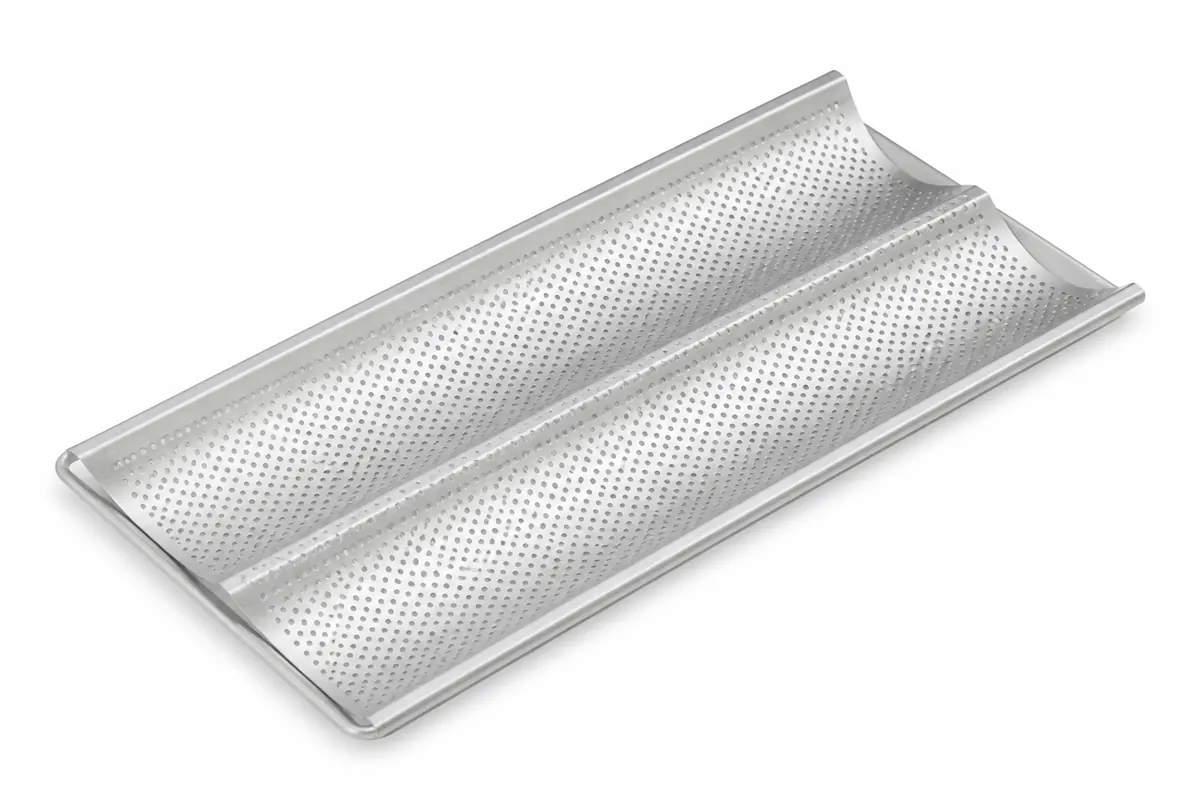
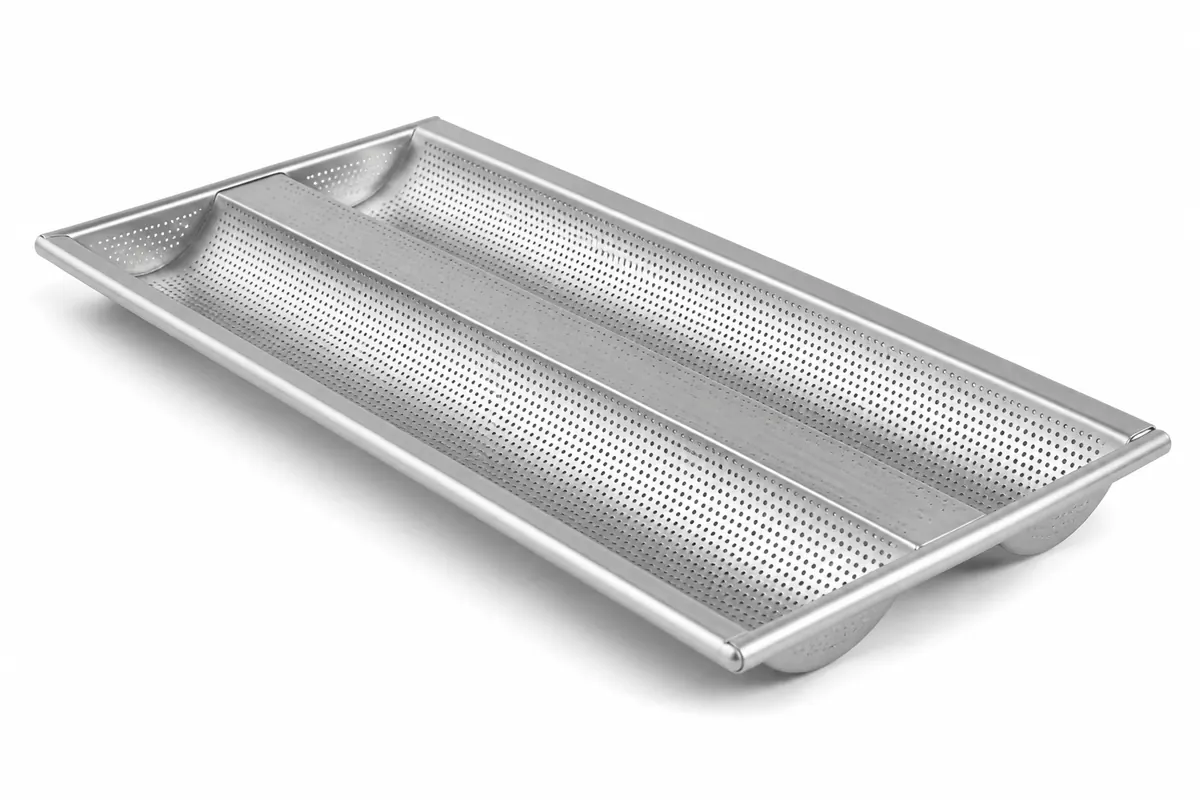
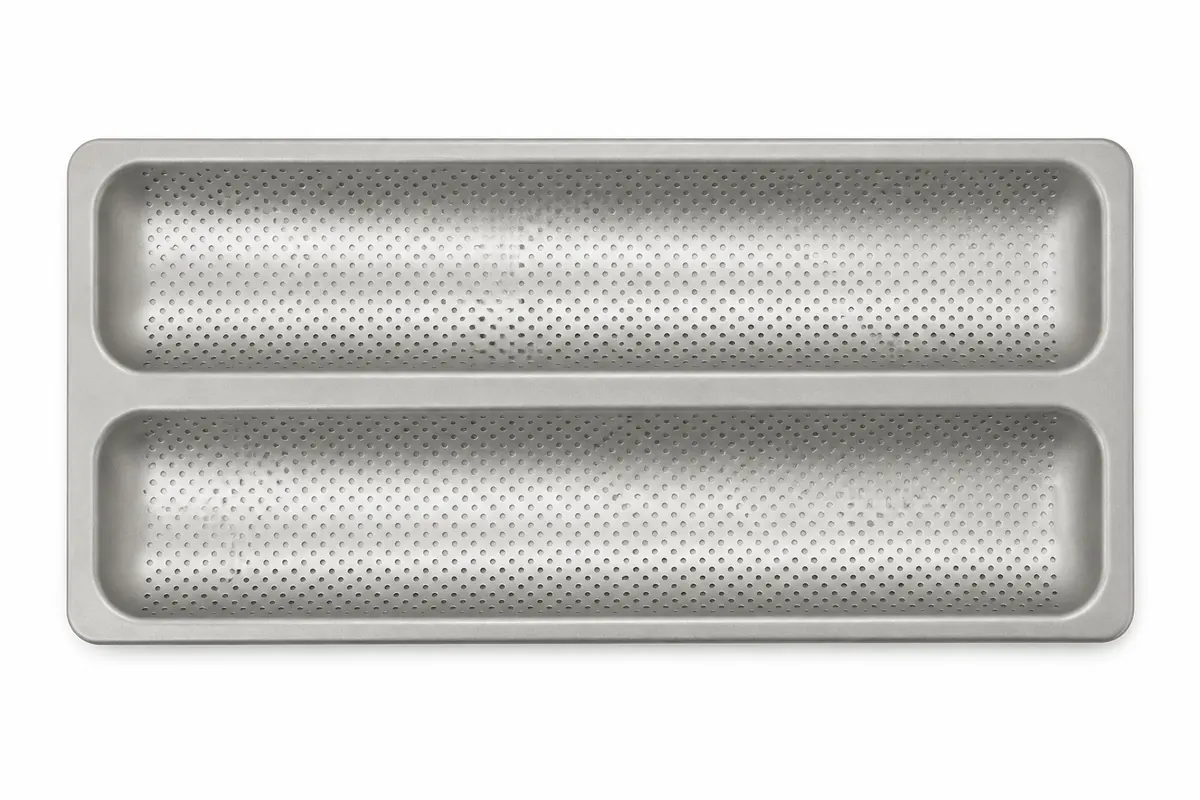
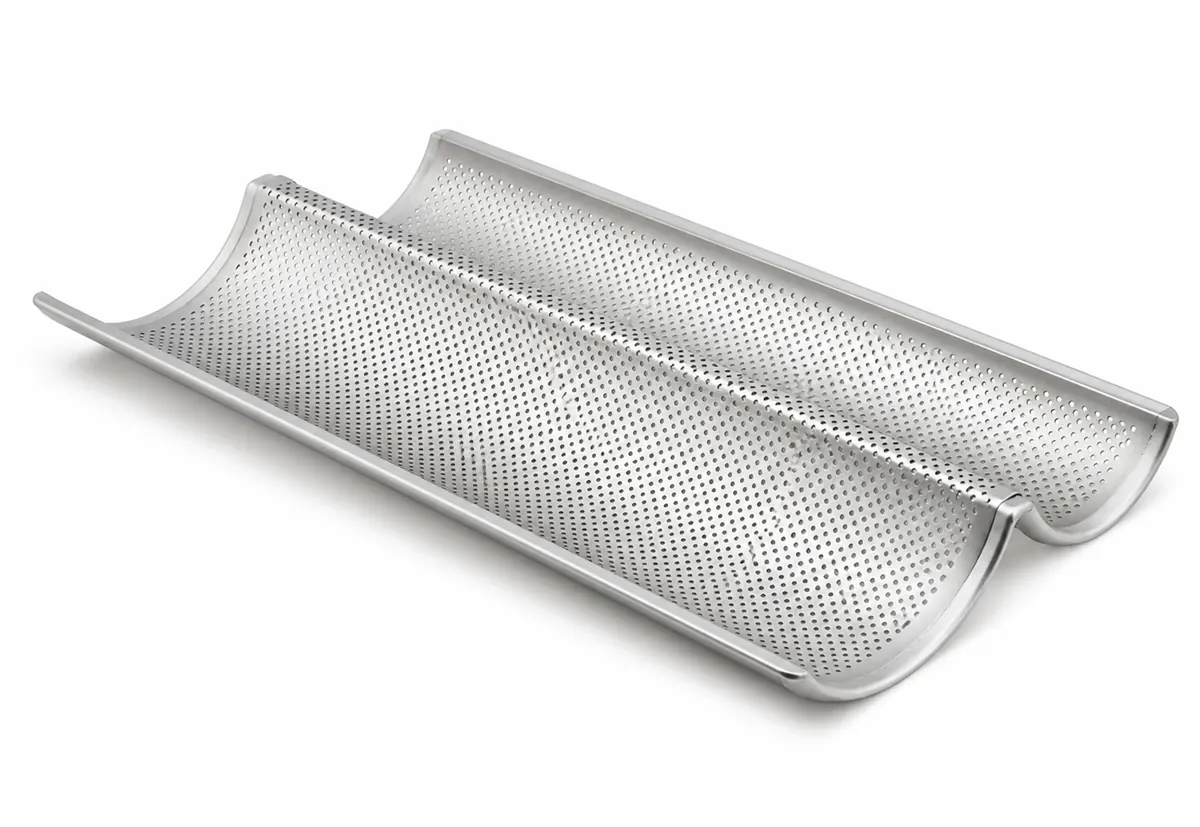
2-channel baguette pans are used when a buyer needs a lower channel count, a custom two-loaf tray layout or a pan envelope that must fit existing racks, ovens, trolleys or handling equipment.
Product Overview
A 2-channel configuration gives more room to review loaf support, channel width, channel depth and edge structure for a specific bread size or equipment layout. It can be useful for smaller batch production, replacement pans, sampling programs or lines where tray width is limited.
Specifications
| Product configuration | Two baguette channels |
| Pan dimensions | Custom to rack, oven or trial-line envelope |
| Channel width | Custom, based on target loaf width and proofed dough spread |
| Channel depth | Custom, based on support needed for the intended baguette profile |
| Material options | Aluminum, aluminized steel or coated steel |
| Surface design | Perforated or project-specific surface design |
| Coating options | Natural, non-stick or silicone coating |
Materials
For a two-channel tray, material review often starts with handling weight, pan stiffness and how the smaller channel count will be used in racks or test ovens. Aluminum, aluminized steel or coated steel can be evaluated against the buyer-supplied drawing, existing sample or bakery equipment constraints.
For related material decisions, see anodized aluminum vs regular aluminum bakeware.
Perforation and Airflow
Perforation can be reviewed for the intended baguette dough, oven airflow and cleaning method. Hole pattern, open area and unperforated edge zones should be confirmed by drawing or sample rather than assumed from a generic tray photo.
Coating Options
Coating choice should be reviewed against the actual bread formula, release method and cleaning process. For a 2-channel pan used in trials or replacement programs, matching the approved sample finish can matter more than selecting a generic non-stick label.
Customization Options
Key 2-channel customization points include channel width, channel depth, channel radius, rim detail, overall tray width and compatibility with existing rack runners or oven clearance. If the buyer is replacing a small batch of pans, sample photos from the top, side and underside are useful.
Applications
Commercial bakeries, bread factories, bakery equipment trials, frozen dough programs and replacement tray projects where two-channel layout is preferred.
How to Specify a Custom Baguette Pan
Start with the target loaf size and the maximum pan envelope allowed by the rack or oven. For two-channel pans, confirm whether the goal is easier handling, narrow equipment fit, sample validation or matching an existing two-loaf tray.
Frequently Asked Questions
When should a buyer choose a 2-channel baguette pan?
Choose a two-channel layout when the bakery needs a narrower tray, lower loaf count per pan, trial quantities, replacement of an existing two-channel design or more room around each loaf.
Which dimensions matter most on a two-channel baguette tray?
Channel width, channel depth, overall tray width, rim height and rack-contact points usually need careful review because fewer channels do not remove equipment-fit requirements.
Can a 2-channel pan be matched to an existing sample?
Yes. Send top, side and underside photos, overall dimensions, channel measurements and notes on any fit, release or deformation problems with the current sample.
What RFQ information helps avoid a poor two-channel fit?
Provide loaf size, desired channel profile, rack or oven opening, runner spacing, pan quantity, material preference, coating requirement and any drawing or measured sample.
Related Products
Request a Custom Quote
For a 2-channel RFQ, send the target loaf size, existing two-loaf pan dimensions if available, rack or oven limits, channel width and depth targets, material preference, coating need and photos of the current pan or equipment contact points.