
4-Channel and 5-Channel Baguette Pans
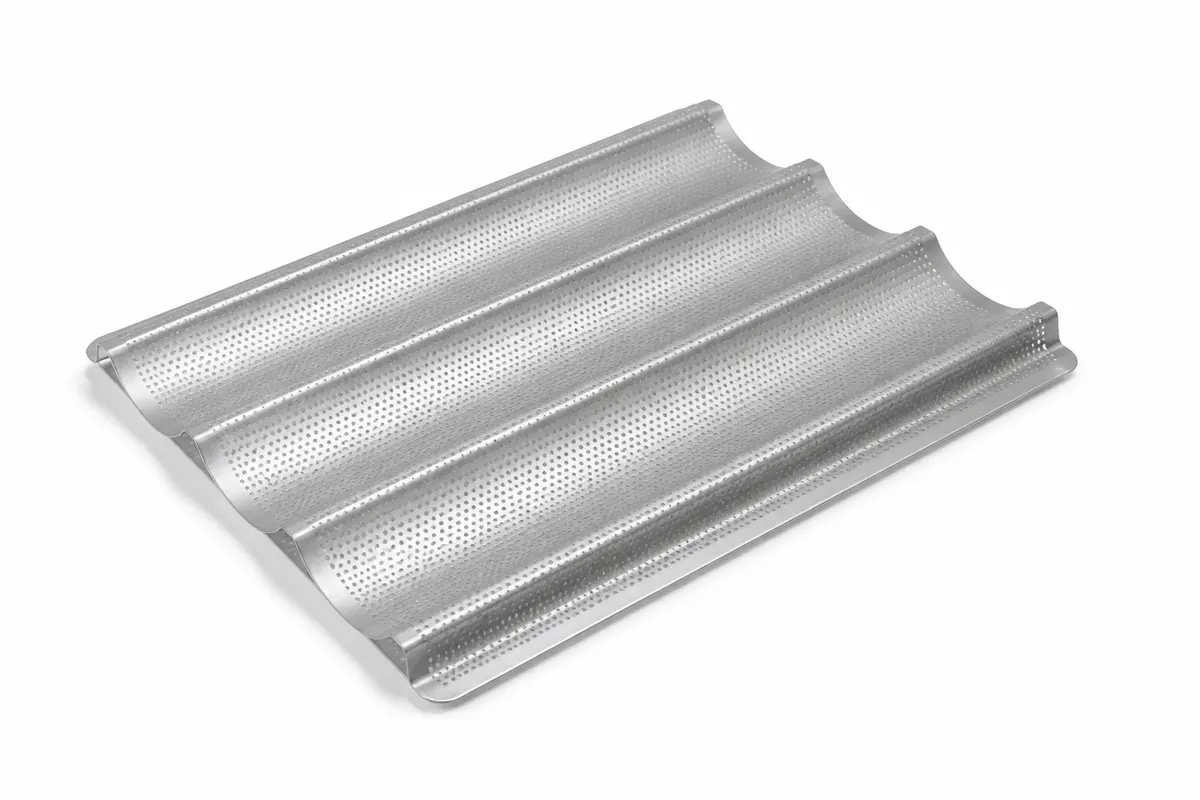
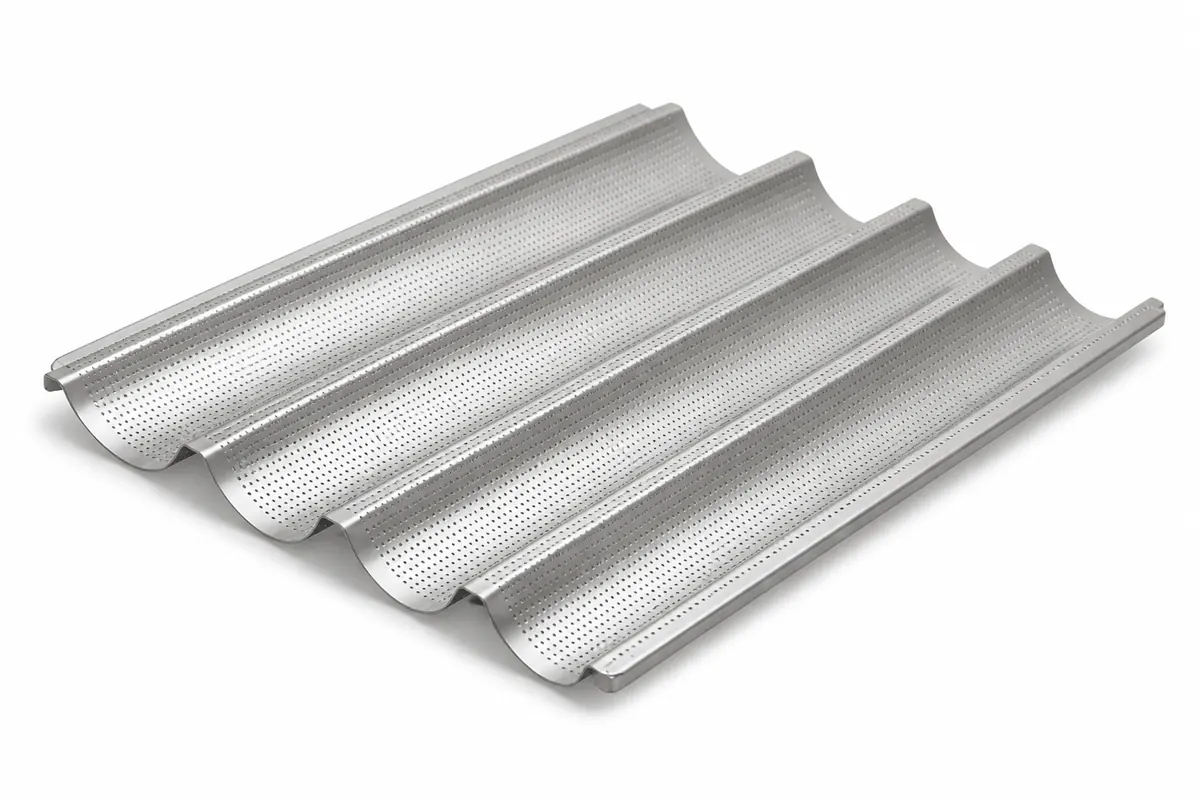
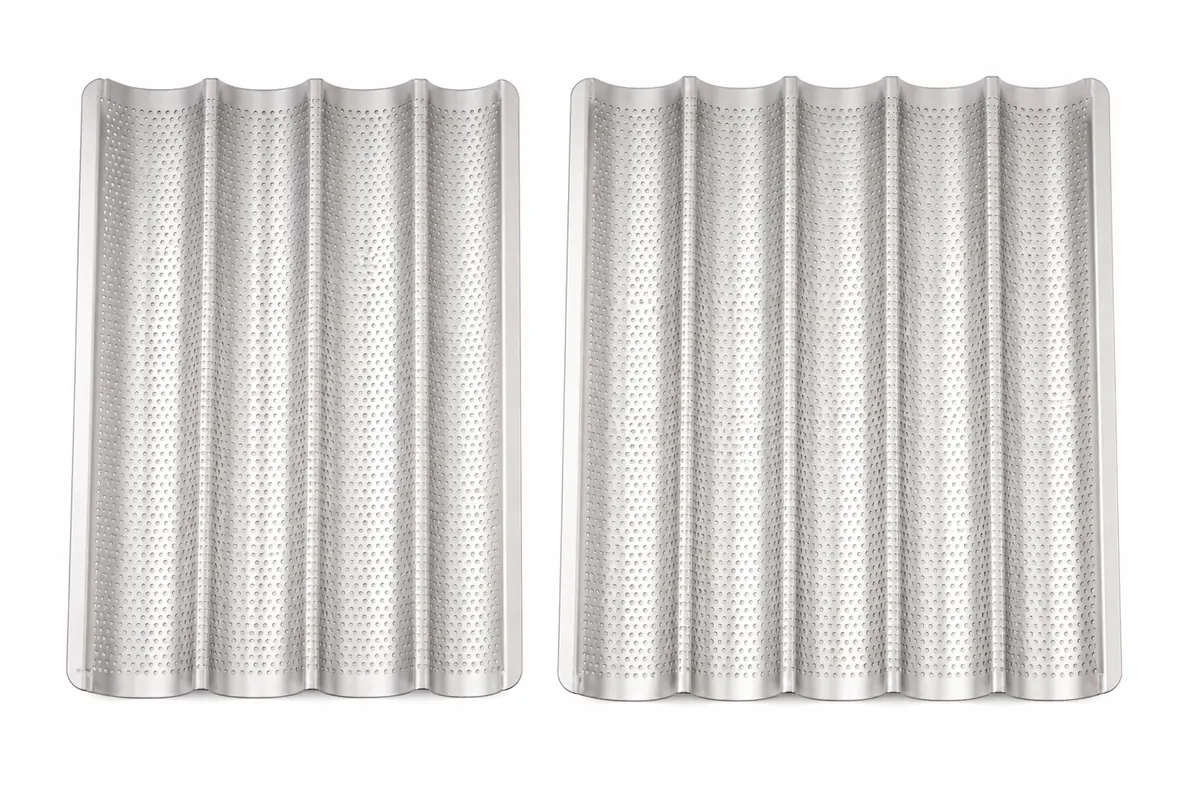
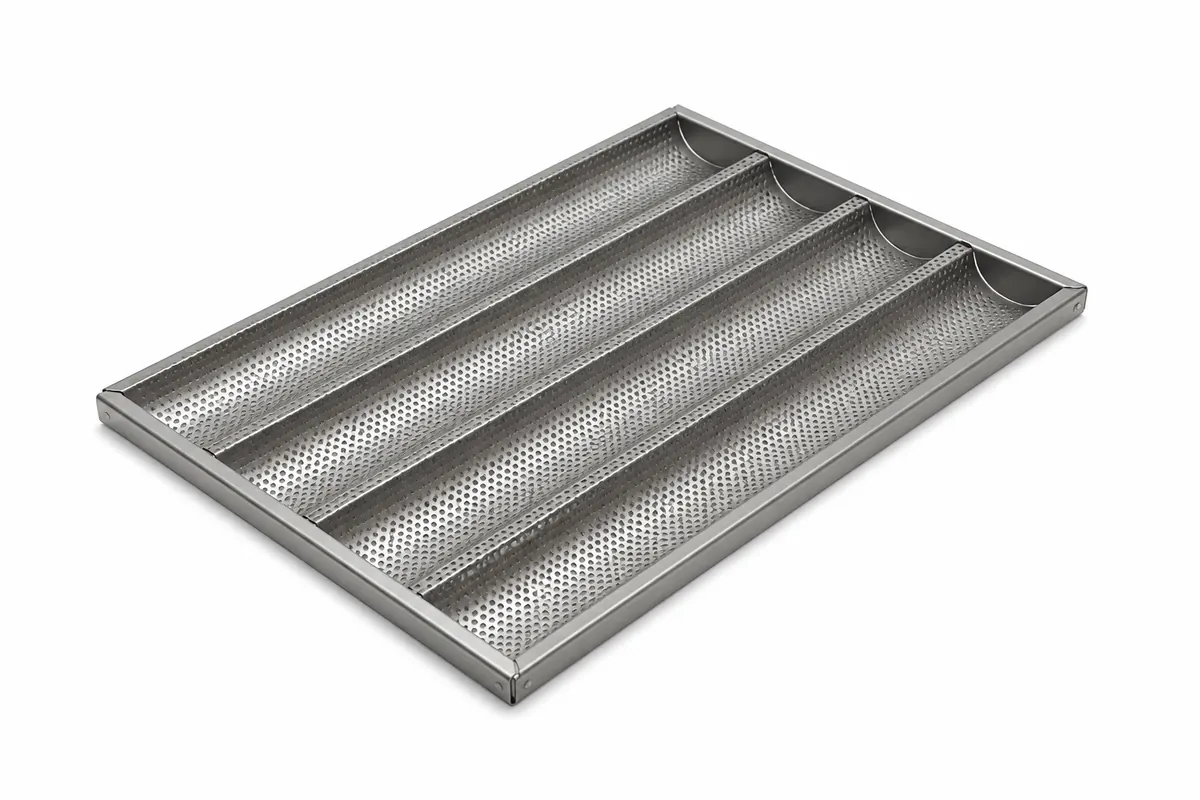
4-channel and 5-channel baguette pans are multi-loaf tray configurations for commercial bakeries that need higher tray utilization while still controlling channel spacing, airflow and equipment fit.
Product Overview
Higher channel density must be reviewed with the full tray size, loaf dimensions, channel spacing, pan stiffness and rack or oven clearance. A 4/5-channel tray should not be selected by channel count alone; it needs to fit the bakery process and handling route.
Specifications
| Product configuration | Four or five baguette channels |
| Pan dimensions | Custom to rack, oven and tray utilization requirements |
| Channel spacing | Custom, based on 4-channel or 5-channel layout review |
| Channel geometry | Custom, based on loaf size and approved drawing |
| Material options | Aluminum, aluminized steel or coated steel |
| Surface design | Perforated or project-specific surface design |
| Coating options | Natural, non-stick or silicone coating |
Materials
For 4-channel and 5-channel trays, material review should include the larger loaded tray area, handling route and stiffness expectations. Aluminum, aluminized steel or coated steel can be considered, but the final choice should follow the buyer drawing, equipment fit and production use. For projects prioritizing material weight and finish, review the dedicated Aluminum Baguette Pans page.
For related material decisions, see anodized aluminum vs regular aluminum bakeware.
Perforation and Airflow
Perforation and channel spacing should be evaluated together. More channels can reduce unused tray area, but buyers still need enough spacing for product arrangement, airflow and practical cleaning.
Coating Options
Coating review for higher-density trays should consider release across all channels, cleaning access and whether the same finish is required on channel surfaces and frame or border areas. Claims about release should be validated with the buyer product and process.
Customization Options
For 4/5-channel designs, the main custom decisions are whether four or five channels fit the tray envelope, how much spacing remains between loaves, where solid support zones are needed and whether the pan structure suits the handling route.
Applications
Industrial French bread production, high-volume commercial bakery lines, distributor programs and replacement trays where multi-channel layout is required.
How to Specify a Custom Baguette Pan
First decide whether the equipment envelope can support a four-channel or five-channel layout. Then confirm loaf dimensions, spacing, tray strength, perforation area and rack or oven constraints before approving the production drawing.
Frequently Asked Questions
How should buyers choose between 4-channel and 5-channel baguette pans?
Start with the rack or oven envelope, loaf size and required spacing. Five channels may use more tray area, but four channels may be more practical when spacing, handling or airflow limits are tighter.
What risks should be checked on higher-density baguette trays?
Buyers should review channel spacing, tray stiffness, rack fit, oven clearance, perforation zones, cleaning access and whether the loaded tray can be handled reliably.
Does more channels always mean a better commercial tray?
No. A higher channel count only helps when the bakery process, airflow, product spacing and equipment dimensions support that layout.
What drawings or measurements help quote a 4/5-channel tray?
Send the desired channel count, loaf dimensions, maximum tray size, rack runner spacing, oven opening, preferred perforation area, coating requirement and photos of any existing tray.
Related Products
Request a Custom Quote
For a 4/5-channel RFQ, send the required channel count or both options for review, maximum tray dimensions, loaf size, spacing preference, rack and oven constraints, material and coating requirements, quantity and existing pan photos if available.