
Rimmed Sheet Pans
Rimmed sheet pans are specified when a bakery buyer needs a raised edge for handling, product containment, stacking behavior or compatibility with existing racks and ovens.
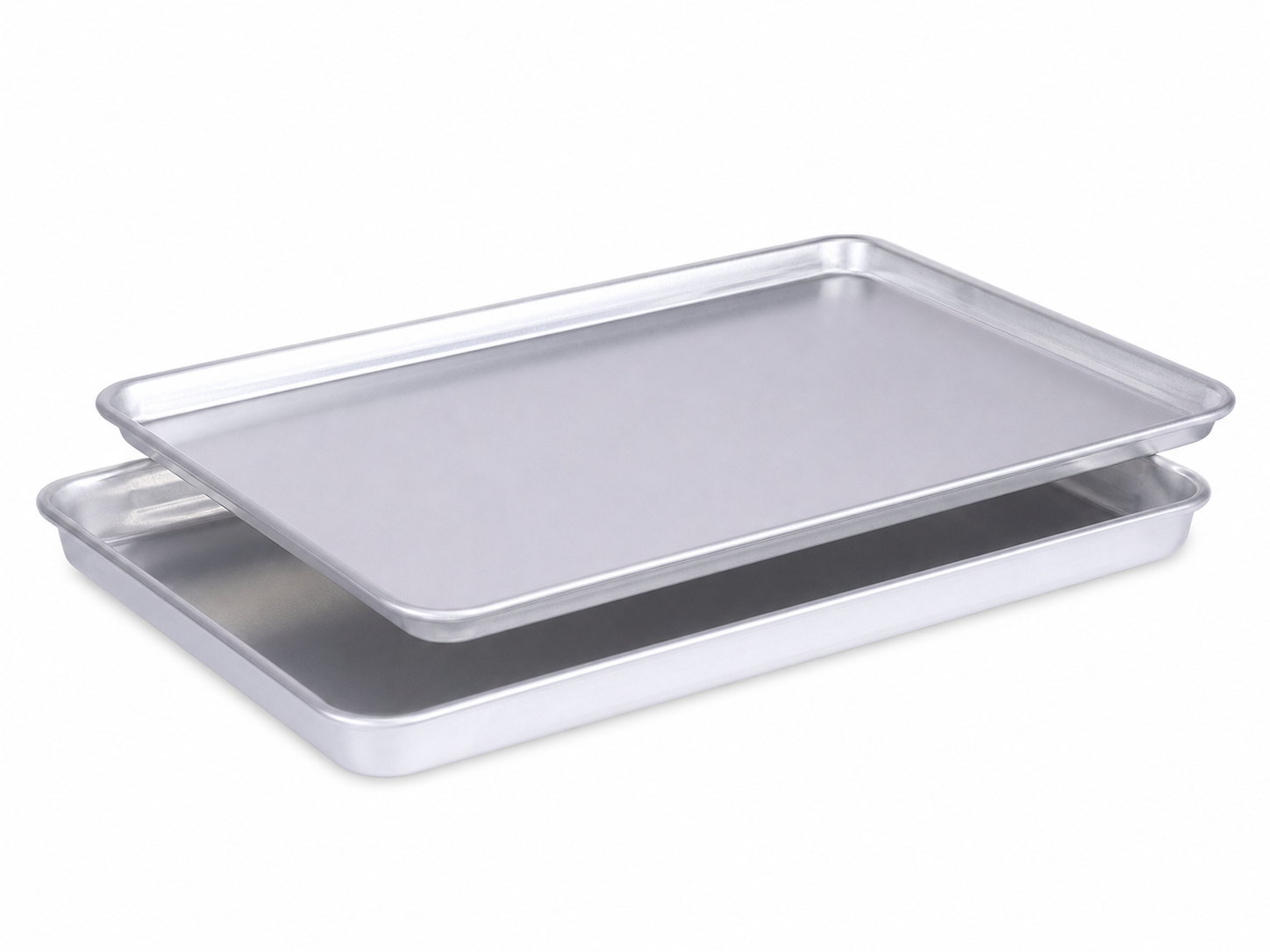
Product Overview
A rimmed pan should be reviewed as a complete tray, not only as a flat sheet with an edge. Rim height, edge profile, corner construction, pan footprint and rack-contact points can all affect whether the tray fits the buyer process.
Specifications
| Product configuration | Rimmed commercial sheet pan |
| Pan dimensions | Custom to buyer drawing, sample or equipment envelope |
| Rim or edge construction | Custom rim height, edge profile and corner details by project |
| Material options | Aluminum, aluminized steel, carbon steel or stainless steel |
| Surface design | Solid surface or project-specific surface design |
| Coating options | Natural, non-stick, silicone or color coating |
Materials
For a rimmed tray, material review should start with how the raised edge will be used: hand lifting, rack sliding, stacking, washing and replacement-pan matching. The same material can behave differently once the rim profile and corner construction are added, so the buyer should connect material choice with edge design rather than treating it as a separate line item.
For thickness selection, see the commercial sheet pan gauge guide. For equipment fit, see baking tray specifications for automated lines.
Surface and Coating Options
A rimmed pan may use a plain surface, coated surface or project-specific finish, but the rim creates extra areas to define. Buyers should state whether the base, inside wall, outer rim and corner areas need the same finish, especially when the pan must match an approved sample.
Construction and Design
The most important rimmed-pan details are rim height, rim profile, corner shape, base-to-rim transition and clearance where the tray enters racks or ovens. If an existing pan is being replaced, the underside view and side view are as useful as the top view because they show how the tray is supported.
Customization Options
Customization should focus on the raised-edge geometry: outside pan size, usable base area, rim height, corner treatment, stacking behavior and rack-contact points. Material and coating can then be reviewed against that shape and the buyer production route.
Applications
Rimmed sheet pans fit buyers who need edge containment, repeat handling, rack loading, replacement of an existing raised-edge tray or a controlled private-label tray shape.
How to Specify This Sheet Pan
For a replacement project, measure the old pan after checking whether it is bent or worn. Record the outside size, inside usable area, rim height, side profile and any clearance problems in the oven, rack or trolley before asking for a quote.
Frequently Asked Questions
How do I specify rim height without a drawing?
Measure from the base surface to the top of the raised edge and include side photos. If the rim is sloped or rounded, mark where the measurement was taken.
What makes rim profile important for replacement pans?
The rim can determine rack clearance, stacking behavior and how operators grip the tray, so a similar outside size may still fail if the edge profile is different.
Should I send photos of the underside?
Yes. Underside photos help show support points, wear marks and how the pan sits on rack runners or other handling equipment.
Can the rimmed tray match an existing pan sample?
It can be reviewed from a sample or detailed measurements. The quote should identify which details are critical to match and which can be adjusted.
Related Sheet Pans
Request a Custom Quote
For a rimmed sheet pan quote, send outside dimensions, usable base area, rim height, rim profile photos, corner details, material preference, finish requirement, rack or oven clearance limits and the reason for replacement or new development.