Commercial Loaf Pans for Industrial Bakeries
Bakeware China manufactures commercial loaf pans and bread pans for industrial bakeries, bread factories, food manufacturers, bakery equipment distributors and private-label bakeware buyers.
In this product cluster, loaf pans and bread pans refer to the same broad sourcing category. The category page owns the broad commercial intent, while product pages focus on specific configurations such as single pans, strapped sets, corrugated surfaces, Pullman lids, toast bread molds and fully custom projects.
Request a Commercial Loaf Pan Quote
Choose the Right Commercial Loaf Pan Configuration
| Configuration | Buyer use case | Specification focus | Product page |
| Single loaf pans | Individual bread-pan projects, manual handling, replacement pans or flexible bakery batches | Cavity dimensions, pan depth, open-top or lidded requirement, coating | Single Loaf Pans |
| Strapped loaf pan sets | Multiple loaf molds fixed into an assembly for rack, oven or line handling | Mold count, arrangement, pitch, overall envelope, strap construction | Strapped Loaf Pan Sets |
| Corrugated loaf pans | Projects where sidewall or base surface profile must be controlled by drawing or sample | Corrugation area, cavity geometry, cleaning, coating coverage | Corrugated Loaf Pans |
| Pullman pans with covers | Lidded loaf pan projects where pan and lid fit must be specified together | Lid fit, engagement direction, cavity size, replacement matching | Pullman Pans with Covers |
| Toast bread molds | Buyer terminology for toast-bread mold projects; confirm whether open-top or lidded design is required | Toast loaf target, mold geometry, lid need, line/rack fit | Toast Bread Molds |
| Custom loaf pans | Non-standard bread-pan shapes, replacement programs and drawing-based development | Controlled drawing, sample match, material, coating, equipment interfaces | Custom Loaf Pans |
Commercial Loaf Pan Product Options
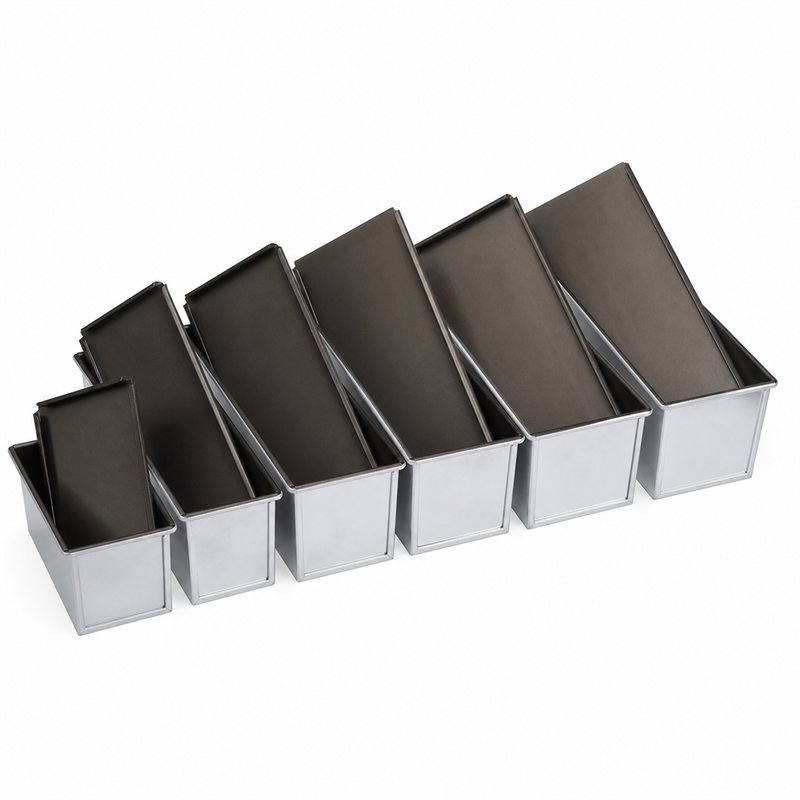
Single Loaf Pans
Individual loaf pans for buyers specifying cavity dimensions, pan depth, coating and replacement-pan details.
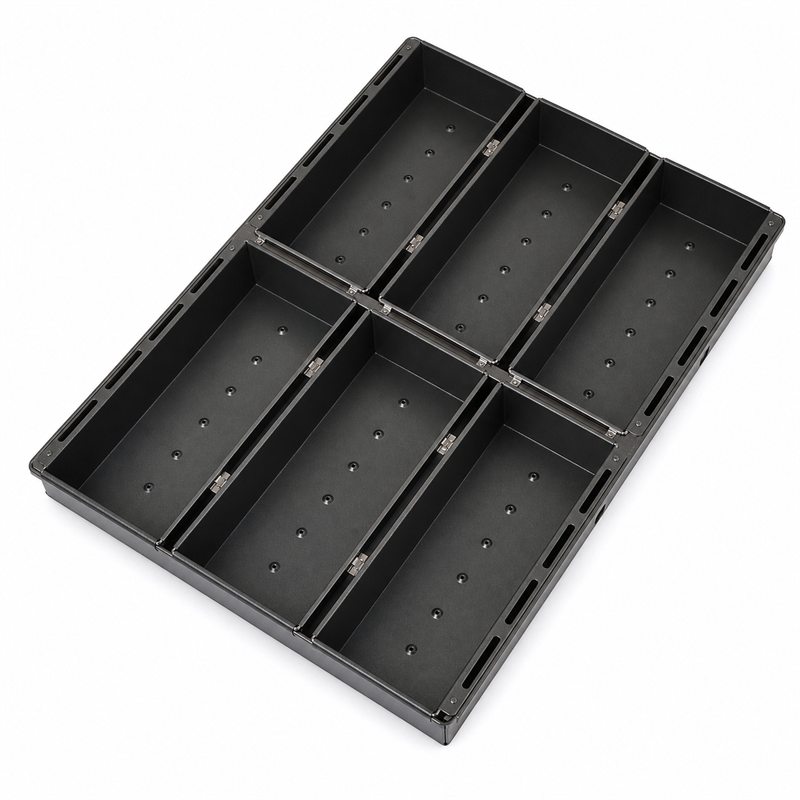
Strapped Loaf Pan Sets
Fixed pan assemblies where mold count, spacing, strap position and overall rack or oven fit must be reviewed together.
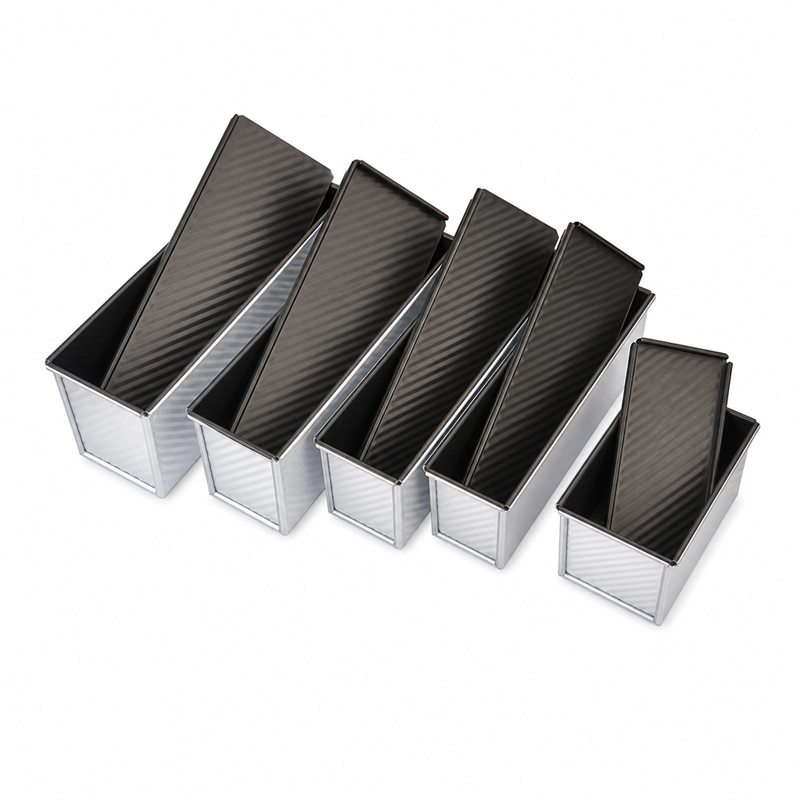
Corrugated Loaf Pans
Loaf pans with corrugated surface requirements that should be defined by cavity drawing, sample photos and coating needs.
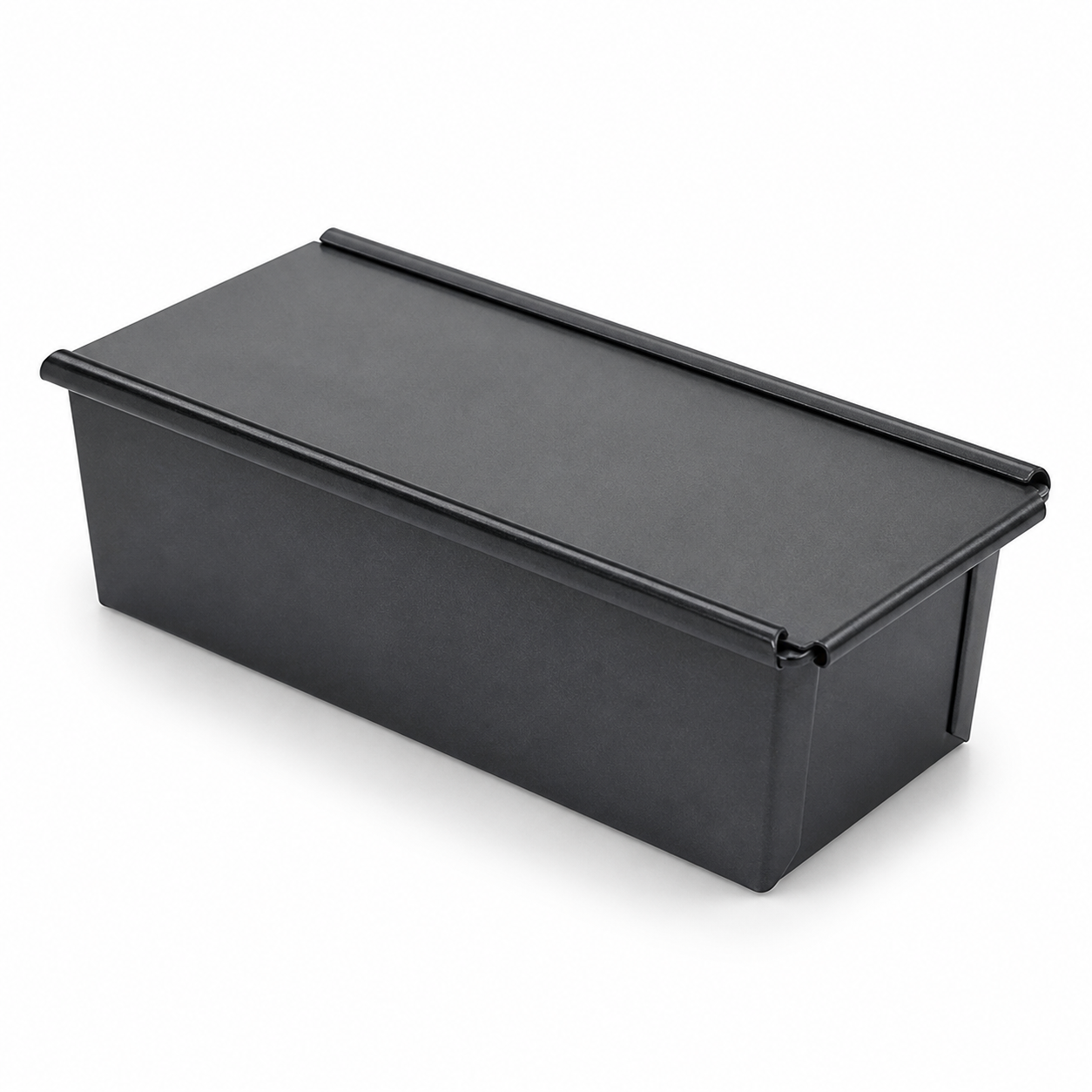
Pullman Pans with Covers
Lidded loaf pan projects where pan cavity, cover fit, sliding or engagement direction and replacement matching matter.
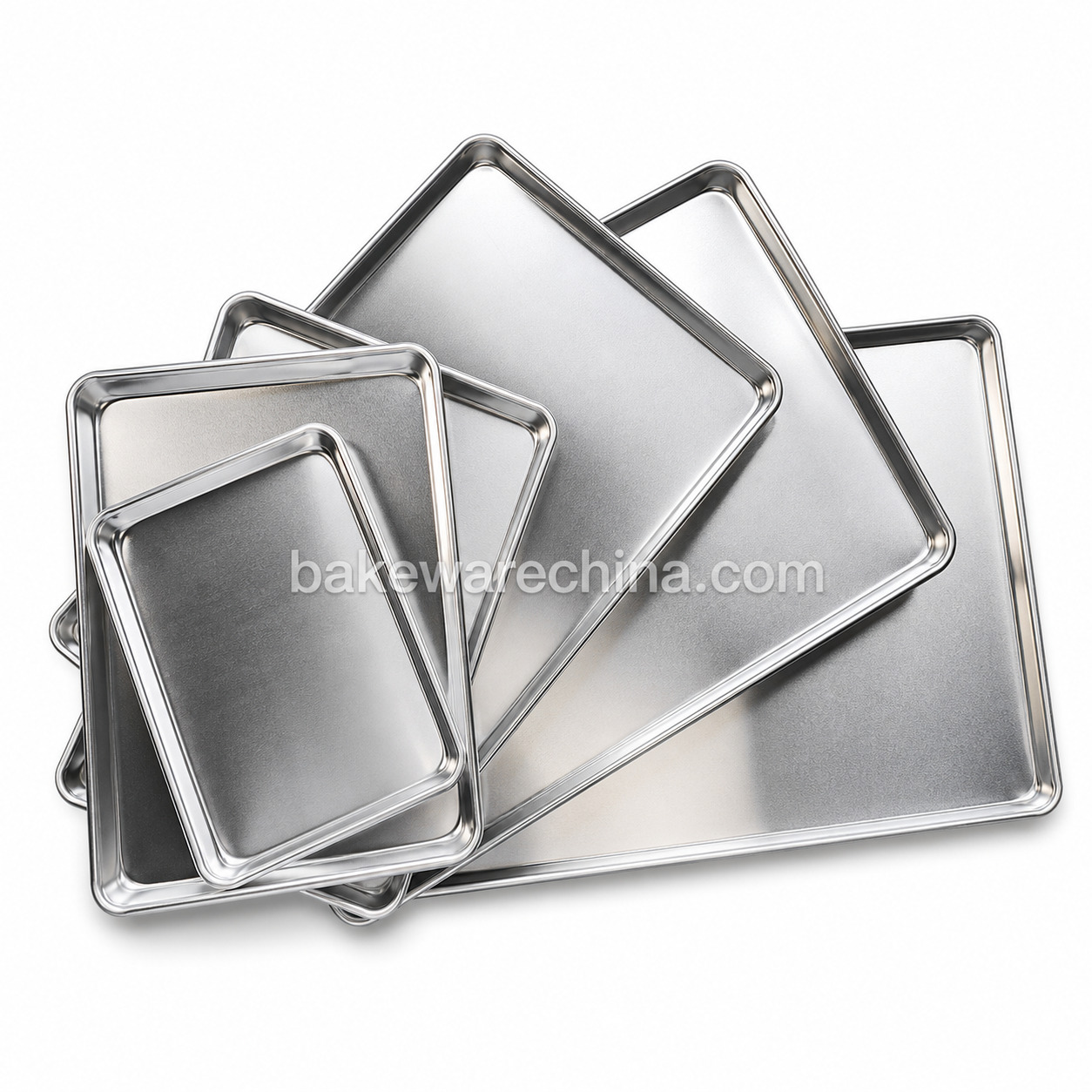
Toast Bread Molds
Toast bread mold projects for buyers who use bread-pan or toast-mold terminology and need the exact configuration confirmed.
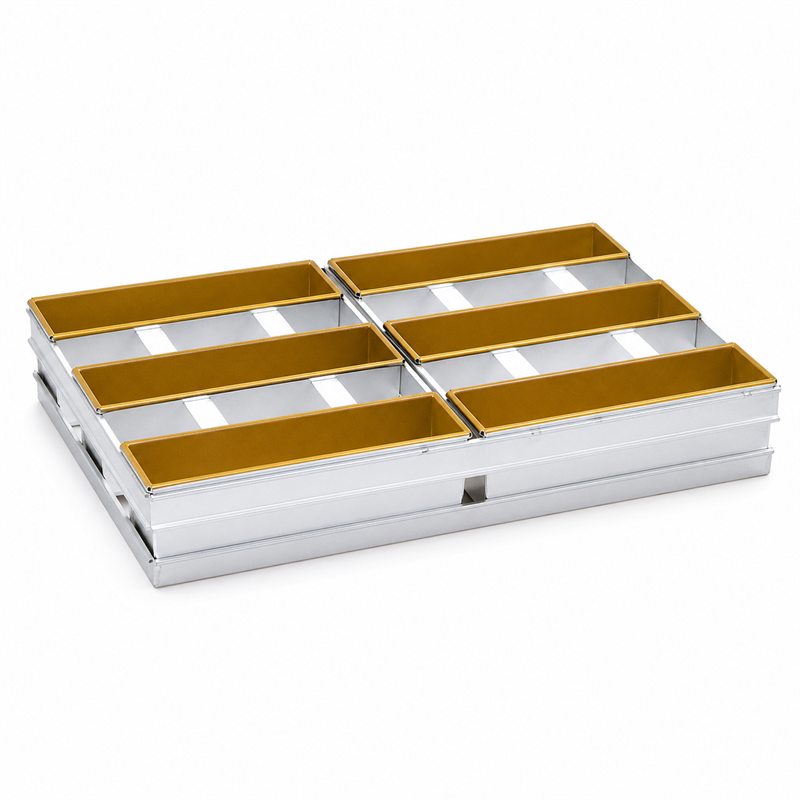
Custom Loaf Pans
Drawing-based loaf pan projects for non-standard cavities, sample matching, private-label programs and equipment-specific pans.
What to Send for a Loaf Pan RFQ
Useful inputs include target bread type, cavity top and bottom dimensions, depth, wall angle if known, open-top or lid requirement, single or strapped format, mold count, pitch, overall pan envelope, material preference, coating requirement, rack or oven dimensions, quantity and current pan photos.
For a deeper specification checklist, see commercial loaf pan specifications for industrial bakeries.
Industrial Loaf Pan Engineering Questions
Which material should an industrial bakery specify for loaf pans?
The choice depends on the oven, product, handling method and cleaning process. Aluminized steel is commonly considered where buyers need a rigid pan with responsive heat transfer, while aluminum can reduce handling weight. Confirm material grade, thickness, frame construction and coating on the approved drawing.
What information is needed to match a strapped loaf pan to an automated line?
Send the cavity dimensions, mold count, pitch, overall pan envelope, conveyor or rack contact points, stacking height and bread weight. Photos or a sample pan help identify frame, strap and cover interfaces that may not be clear from overall dimensions alone.
How should coating requirements be specified?
State the dough, release agent, baking temperature, cycle, cleaning method and expected approval test. Coating selection should be confirmed against the actual process rather than described only as non-stick.