Blog / Bakery Rack Trolley Sourcing
Commercial Bakery Rack Trolley Specifications: A Buyer's Guide
Specify bakery rack trolleys by tray interface, runner pitch, equipment fit, payload, casters, hygiene, trials and inspection.
Bakeware China Editorial Team | 2026-08-05 | 10 min read
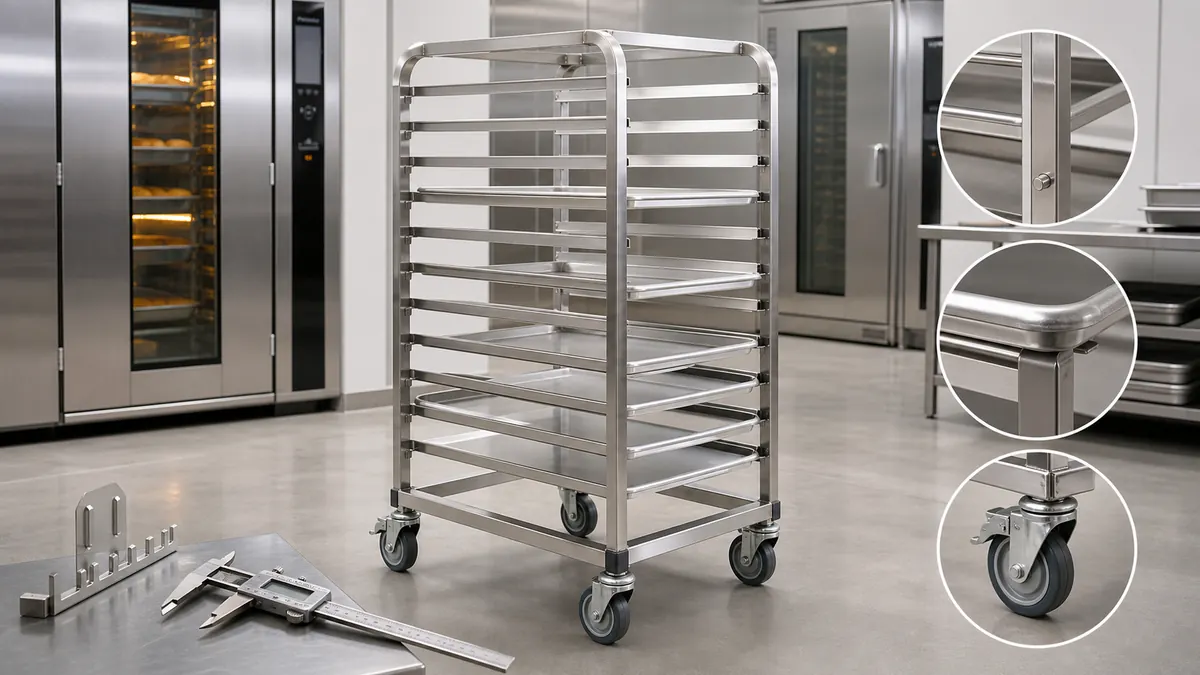
Map the complete trolley route before choosing a frame
Record the route from makeup and proofing through baking, cooling, washing and storage. Measure usable door openings, chamber clearances, turn areas, ramps, drains, thresholds, lifts and transfer points. Identify whether the trolley enters a rotating rack oven or stays outside the oven.
Use the oven, proofer and washer manufacturers' approved interface drawings as controlling inputs. A catalog label such as 18-tier or standard trolley does not establish fit. Document every hook, locator, turntable, lift or restraint that touches the trolley.
Define tray size, loading direction and runner geometry
List every baking tray or strapped pan set the trolley will carry. Specify actual outside length, width, rim profile, mass and loading direction rather than relying on nominal regional names.
Put runner length, clear width, vertical pitch, insertion stop, edge retention and permitted projection on the drawing. Confirm hand clearance. Trays should remain supported through normal movement without snagging a rim, strap or coating during unloading.
Calculate capacity from the real loaded condition
State maximum levels and the heaviest approved load per level, then calculate intended payload from the actual product and pan combination. Add trolley tare mass when evaluating floors, lifts, handling and oven interfaces. Do not turn an unverified component rating into a finished-rack working-load claim.
Ask the supplier to explain the load path through runners, uprights, cross members, welds, base and casters. Agree how a prototype will be checked for runner deflection, frame distortion, tray retention and movement against written acceptance criteria.
Specify casters for floors, heat and handling
Define wheel diameter, tread and hub material, bearing arrangement, mounting style, swivel pattern, brakes or directional locks, temperature exposure and cleaning chemicals. Include thresholds, floor joints, drains and slopes. Use the component maker's documented ratings for the stated load and environment.
Trial starting force, steering, stopping and parking with the intended load. Confirm brakes are accessible and wheels do not interfere with oven locators, rack lifts or wash equipment. The best swivel arrangement depends on the plant route.
Design for cleaning, inspection and food-area use
Specify material grade and finish, tube closure, weld treatment, drainage, accessible joints and permitted fasteners. ISO 14159 covers hygiene requirements for machinery and associated equipment where consumer hygiene risks can occur. NSF/ANSI 2 covers food-equipment materials, design, fabrication, construction and performance, including bakery units and shelves.
These references are specification inputs, not proof that a trolley is certified. If certification is required, name the exact standard, market, model and evidence, and verify the current listing. Define cleaning chemistry, temperature, drying and inspection access separately.
Control oven and proofer compatibility as separate approvals
Record whether the trolley enters the oven or proofer, maximum stated process temperature, dwell time, rotation method and contact points. The equipment maker or integrator should approve the interface and permitted materials or caster system.
Run equipment fit and bakery handling as separate gates. A rack that rolls well may conflict with a turntable; a rack that fits a chamber may be awkward at a threshold. Never alter guards, interlocks or lifting devices to make a prototype fit.
Approve a production-representative sample
Build the sample with intended tube, sheet, runners, weld process, finish, casters and fasteners. Load the specified trays and product, then repeat the complete route under safe operating procedures. Record clearance, tray movement, steering, braking, stability, drainage, distortion and cleaning results.
Freeze the approved sample ID and drawing revision. Results apply to the tested configuration and duty cycle, not every possible use. Changes to dimensions, material, welds, casters, finish or production location should follow an agreed notice and reapproval process.
Turn the specification into an inspection-ready RFQ
Attach a controlled general-arrangement drawing, interface details and bill of materials. Mark overall dimensions, runner pitch, usable runner width, base height, caster envelope and equipment contact points. State measurement method, tolerance and sample plan.
Add workmanship, edge safety, weld, finish, wheel operation, brake, marking, packaging and document requirements. Use the supplier checklist and send drawings, equipment interfaces and quantities through the custom bakeware RFQ.
Frequently asked questions
What dimensions are needed for a bakery rack trolley quote?
Provide the maximum envelope, tray dimensions, loading direction, runner count and pitch, caster envelope, chamber clearances and equipment contact points.
How many tray levels should a bakery trolley have?
There is no universal number. Select levels from tray height, product clearance, airflow, payload, operator reach and equipment envelope.
Can one trolley fit different commercial ovens?
Only when each oven's approved interface, chamber, locator, rotation and clearance requirements are compatible and validated.
Should rack trolleys use stainless steel or aluminum?
Choose from process, cleaning, heat exposure, weight target, structural design and destination requirements. Specify exact grade and finish.
What should be tested before approval?
Test tray retention, loaded movement, braking, thresholds, equipment interfaces, heat exposure where applicable, cleaning, drainage and dimensions.
Request a rack trolley specification review
Planning a new rack-oven line or replacing bakery trolleys? Send tray drawings, equipment interfaces, payload, cleaning method, quantity and destination market for a specification review and quotation. Use our inquiry form.