Blog / Materials and Heat Performance
Why Do Professional Bakers Prefer Light-Colored Metal Pans?
Professional bakers often choose light metal pans for consistent timing, controlled browning and repeatable production.
Bakeware China Editorial Team | 2026-07-02 | 5 min read
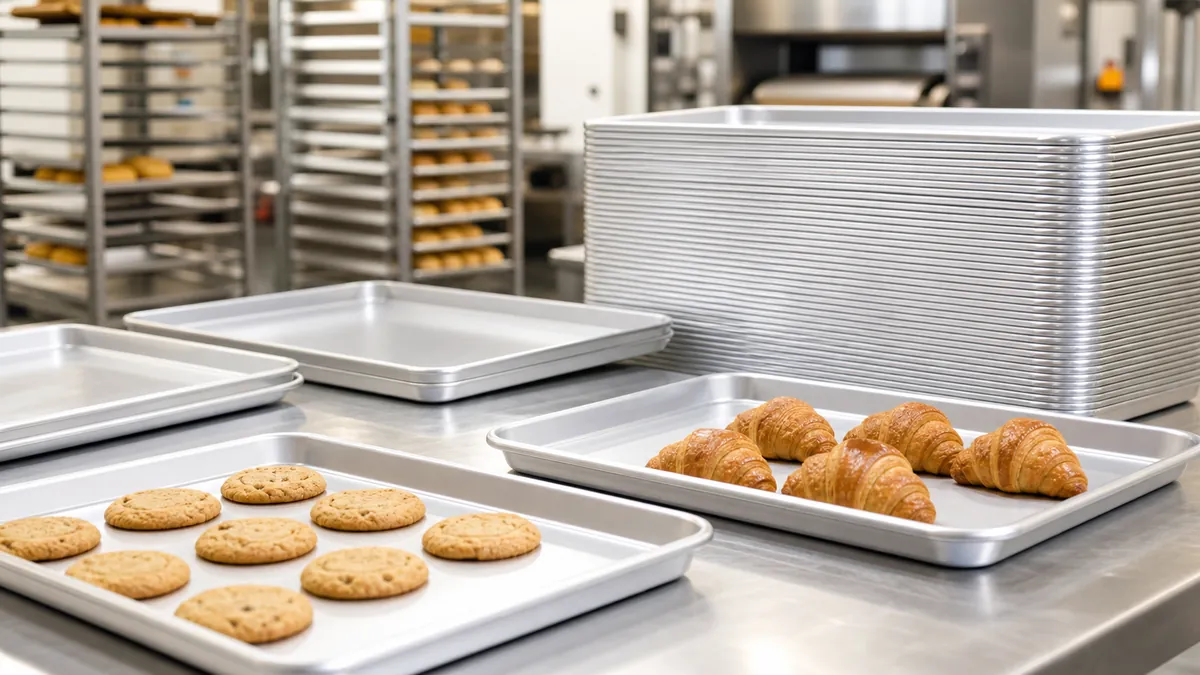
Consistency matters more than maximum browning
In a bakery, one perfect tray is not enough. The same pan must perform across repeated batches, different rack positions and busy production schedules. Light-colored metal pans absorb less radiant heat than dark pans, giving bakers more control.
That control matters for cookies, rolls, cake layers and buns. The product has time to set and brown evenly instead of scorching at the bottom or edges.
Why this matters for manufacturing buyers
When sourcing commercial baking sheet pans, repeatability is a product feature. Buyers need the same size, rim height, material thickness, coating and surface color from order to order.
Light metal also makes defects easier to spot. Warping, staining and surface damage are more visible, which helps bakeries remove poor-performing pans before they create batch problems.
How to copy the professional approach
Use light aluminum or aluminized steel for the core production range. Add dark or coated pans only where the recipe demands more browning or easier release.
For OEM programs, keep finish color consistent within a SKU. Mixing light and dark pans in the same production line can create uneven baking results.
FAQ
Are light-colored pans always better?
No. They are more predictable, but dark pans can be better for strong browning.
What material do bakeries use for sheet pans?
Many bakeries use aluminum or aluminized steel because they combine heat performance and durability.
Why do pan finishes matter?
Finish color affects radiant heat absorption, which changes browning speed and product color.
Call to action: Need consistent light metal pans for bakery replacement or wholesale supply? Send your specification for a production quote.