Blog / Materials and Heat Performance
Do Dark Baking Pans Really Make Food Brown Faster?
Learn why dark baking pans brown faster, when darker finishes help and how to avoid overbaked bottoms.
Bakeware China Editorial Team | 2026-07-03 | 5 min read
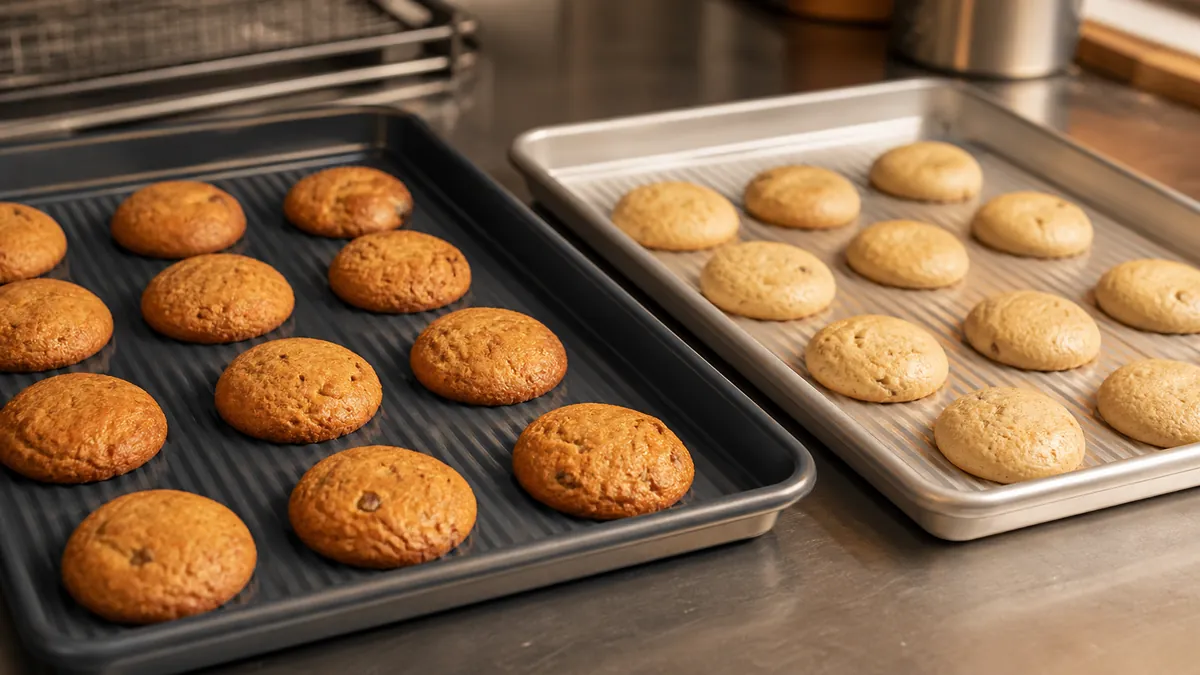
Dark surfaces absorb more oven energy
Oven heat reaches food through hot air, contact with the pan and radiant energy from oven walls and elements. Dark pan surfaces absorb more radiant energy than bright surfaces, so the food touching the pan often browns faster.
This can be helpful or harmful. It can improve crust on pizza and roasted foods, but it can also make cookies too dark underneath before the top is fully set.
Where dark pans make sense
Dark finishes are useful for products where strong browning is a selling point. Pizza pans, some bun pans and certain roasting trays may benefit from darker coatings when the goal is color and crispness.
For pale cakes, sugar cookies and delicate bakery items, light metal offers a wider timing window. That is why professional bakers often keep light pans for precision work.
How to control browning
If a recipe was developed for light metal, reduce oven temperature slightly or check earlier when using a dark pan. Parchment can buffer direct contact, and rack position can help reduce bottom heat.
For product development, test dark coating with the actual product. A finish that looks premium on the shelf must still bake correctly in the buyer environment.
FAQ
Are dark baking pans bad?
No. They are useful when stronger browning is desired, but they require temperature and timing awareness.
Do dark pans make cookies crispier?
They can make cookie bottoms darker and crisper, sometimes too quickly.
Should commercial pans be dark or light?
It depends on the baked product. Light pans suit precision; dark pans suit stronger browning.
Call to action: Developing dark coated pizza pans, bun pans or trays? Request sample testing before confirming bulk production.