Blog / Industrial Bakeware Engineering
Commercial Bakeware Thermal Expansion: How Buyers Should Specify Flatness and Tolerances
Control hot-state dimensions, flatness, equipment clearances and thermal-cycle validation before approving industrial bakeware.
Bakeware China Editorial Team | 2026-09-16 | 9 min read
Separate cold dimensions from operating dimensions
Identify dimensions controlling conveyors, guides, rack runners and product geometry, then state whether each limit applies cold, hot or after cooling.
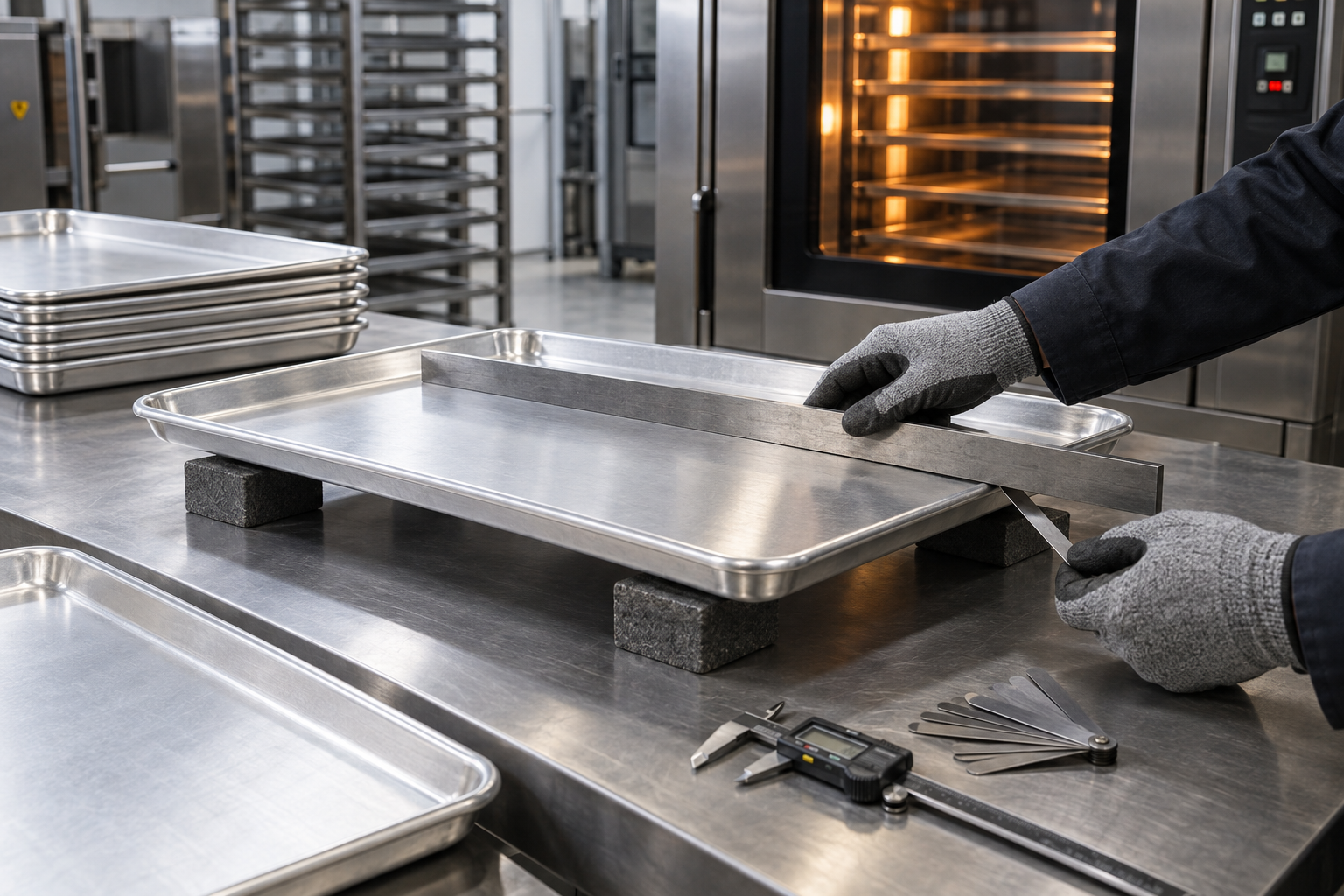
Specify flatness with a repeatable method
Define the reference surface, support points, measurement grid and maximum gap so inspection results remain comparable.
Allow clearance at every equipment interface
Review oven runners, guides, stops, loaders, depanners, washers and stackers against worst-case operating dimensions.
Match material and construction to the duty cycle
Alloy, temper, thickness, rims, frames, welds and coatings influence stiffness and thermal movement.
Run representative thermal-cycle trials
Use the intended support, load, oven profile and cooling method, then record tracking, clearance and residual distortion.
Freeze approval evidence for repeat orders
Keep the drawing, construction records, sample identity, measurement report and trial result under change control.
Request an engineering review
Send your drawing, oven profile, equipment interfaces, material, coating and quantity through our inquiry form.